Ranking Small Machine Room Elevator Suppliers: 10 Purchasing Terms That Make Bids Comparable
Most Small Machine Room Elevator shortlists fail on paperwork, not on hardware. Two suppliers can quote the same shaft, capacity and finish schedule and still return proposals nobody can compare, because each one defined acceptance, delivery and support differently. The fix is sequence: rank the purchasing terms first, then rank the suppliers against them.
This guide ranks ten purchasing terms and acceptance criteria by how much commercial risk each one removes and how directly each one makes two proposals comparable. The commercial baseline used throughout is the supplied purchase-terms record for this product: MOQ 1 unit; delivery terms FOB/CIF; acceptance criteria pre-shipment test; payment terms 30/70. Each ranked item below is written so it can be pasted into an RFQ now and into a contract later, and each is tied to records a supplier should be able to show.
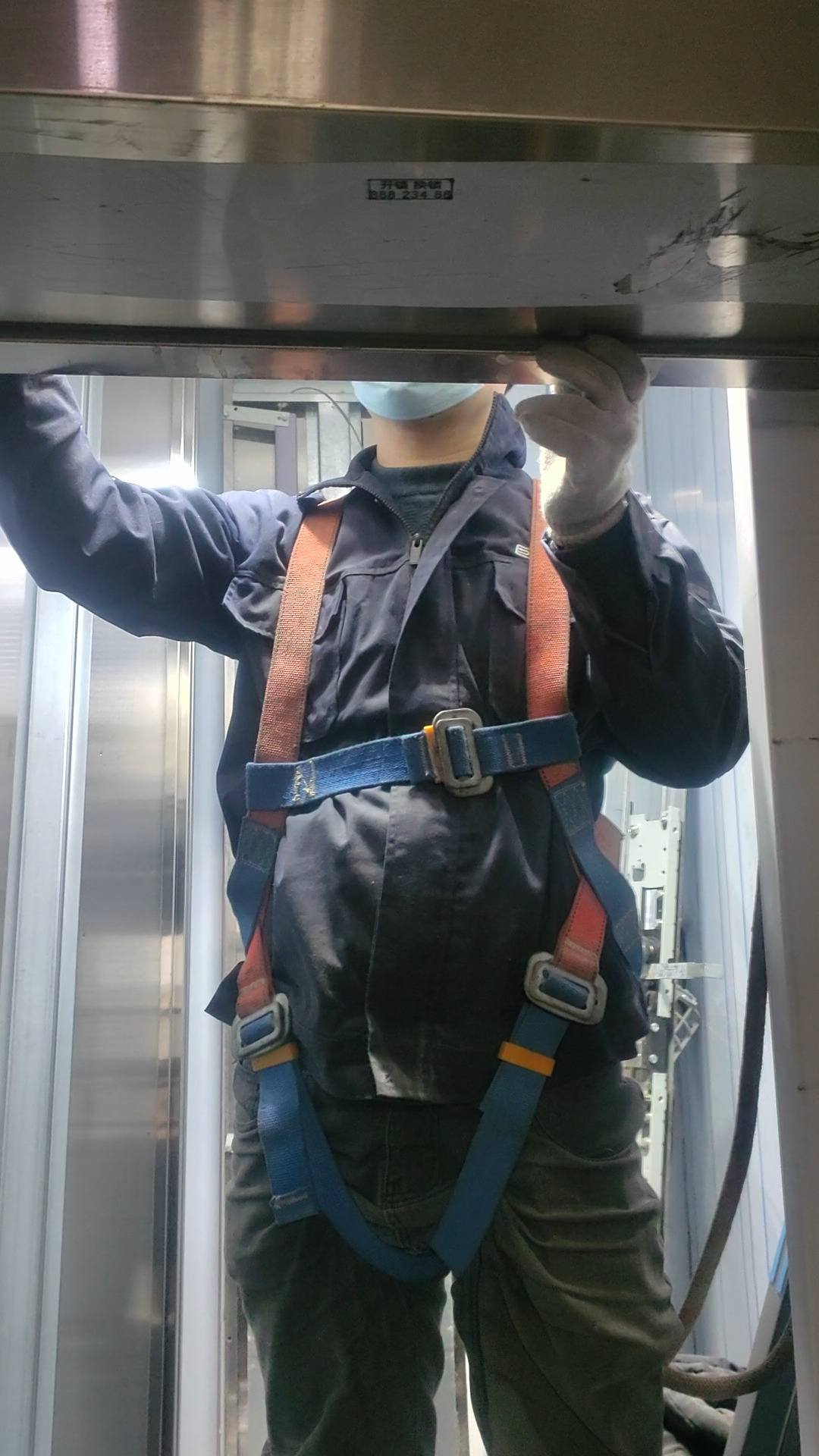
Installation supervision and site safety belong inside the purchasing terms, not in a separate conversation after the order is placed. Image: Joylive Elevator site installation.
Problem Definition: Why Small Machine Room Elevator Bids Drift Apart
Three structural gaps open between the RFQ and the purchase order, and none of them is closed by asking better questions at the end of the process.
Scope drift. One supplier prices the car and the machine; another prices the car, the machine, the installation, the scaffolding and the testing. The headline figures differ by a margin that has nothing to do with product quality. Until the buyer writes the boundary into a numbered term, the two numbers cannot be placed in the same column.
Definition drift. The word “acceptance” is used by different suppliers to mean a factory tour, a certificate bundle, or a witnessed test before shipment. The supplied purchase-terms baseline resolves this for this product category by naming the pre-shipment test as the acceptance criterion — a definition that can be scheduled, witnessed and recorded.
Time-horizon drift. Bid documents usually stop at delivery, while the building needs maintenance, spare parts and response commitments for years afterwards. When lifecycle terms are missing at bid stage, they are negotiated later by a buyer with no alternative supplier left on the table.
Industry Background: What Is Putting Pressure on SMR Procurement
Traction technology is the mainstream of the category, not a niche. Grand View Research recorded that the traction elevators segment held the largest revenue share of 55.1% in 2025, inside a global elevators market valued at USD 82.4 billion that year, with Asia Pacific accounting for 41.7% of revenue in the same period. For buyers, that means supplier density is highest exactly where a shortlist needs discipline: many offers, similar language, different substance.
Component economics are also moving. Mordor Intelligence recorded that rare-earth magnets for permanent-magnet motors increased in price by more than 20% in 2025. Traction specification therefore stopped being a purely engineering choice and became a commercial term, because the motor technology a supplier proposes now affects both first cost and the validity period a supplier can honestly offer on its price.
Acceptance language is becoming more specific as well. Under EN 81-20 and EN 81-50, machine room work spaces require a minimum of 200 lux at floor level in the European Union, and passenger or freight elevators other than continuous action are classified under HS code 842810 for customs purposes. Both are checkable items. Neither is a matter of opinion. A purchasing term that names the standard converts a vague claim about compliance into a document request.
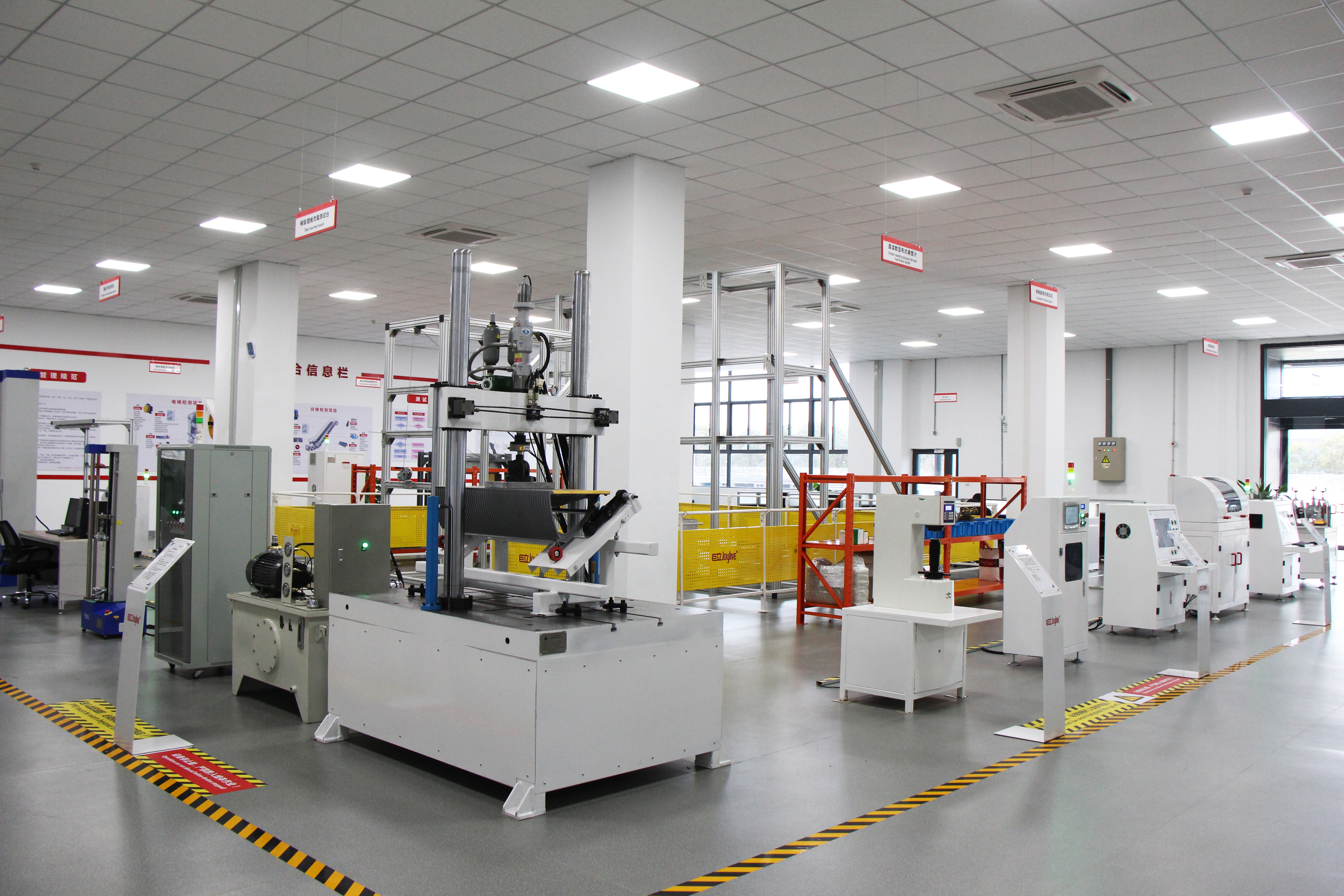
Where a supplier operates an accredited laboratory, pre-shipment testing stops being a promise and becomes a record. Image: Joylive Elevator CNAS-accredited laboratory.
The Ten Ranked Purchasing Terms and Acceptance Criteria
The order below is deliberate. It runs from the terms that remove the most irreversible risk to the terms that shape the longest relationship. A buyer who scores suppliers on items 1 to 6 will already have excluded most of the ambiguity; items 7 to 10 separate the survivors.
Pre-Shipment Acceptance Test Protocol
Why it ranks first. It is the last moment at which a defect can be corrected at the supplier’s cost instead of the project’s. It is also the only criterion the supplied purchase-terms record names explicitly, which makes it the natural anchor for every other term: payment, delivery, warranty and service all assume the equipment was verified before it left the works.
What to write. Test scope, witness names, record format, rejection and re-test rules, and the location of testing. Where the supplier operates an accredited laboratory — Joylive operates a nationally accredited CNAS laboratory and states that materials, processes and inspection procedures are fully traceable — the test report becomes a document with an owner and a reference, not a courtesy visit.
How it makes bids comparable. Two suppliers who both accept a witnessed pre-shipment test can be scored line by line. A supplier that substitutes a certificate of conformity for a test record has just told you how it will handle the next twelve items.
Payment Structure With Milestone Release
Why it ranks second. Money is the buyer’s strongest remaining lever, and the baseline split of 30/70 fixes how much is exposed at each stage. The 30% deposit funds design and material release; the 70% balance is the term that must be tied to evidence.
What to write. A 30/70 schedule in which the 70% is released against a signed pre-shipment acceptance record plus the shipping documents, not against a shipment date alone. Add the consequence of a failed test: re-test at whose cost, and what happens to the balance during the re-test window.
How it makes bids comparable. A 50/50 offer and a 30/70 offer are not the same proposition at different prices; they are different risk allocations. Normalise every bid to one milestone map before comparing totals.
Delivery Terms and Customs Basis
Why it ranks third. Delivery terms decide who buys freight, who insures the cargo, and the exact point where risk passes. The baseline record lists FOB/CIF, which is a choice, not a default: FOB leaves export clearance and the main carriage to the buyer, CIF hands the carriage and insurance to the supplier.
What to write. A named Incoterm with a named port, plus the classification basis. HS 842810 covers passenger or freight elevators other than continuous action, and agreeing the code in the purchase order avoids a customs conversation at destination.
How it makes bids comparable. FOB and CIF totals are not comparable numbers. Convert every offer to a single Incoterm, state the conversion, and compare the converted figures.
MOQ and Quantity Basis
Why it ranks fourth. A minimum order quantity of 1 unit changes what is possible for a retrofit, a single-shaft project or a pilot installation. It also prevents batch pricing from obscuring the true unit economics of a small order.
What to write. MOQ stated as 1 unit, the quantity basis for the quoted price, the validity period of that price, and whether spare parts are priced inside or outside the unit price. Given the more than 20% rise in rare-earth magnet prices recorded for 2025, the validity clause deserves a real date rather than “subject to confirmation”.
How it makes bids comparable. A price quoted at one unit and a price quoted at twenty units are answers to different questions. Fixing the basis makes the two numbers speak about the same order.
Leveling Accuracy and Automatic Re-Leveling
Why it ranks fifth. Leveling is the acceptance item passengers experience several times a day, and it is measurable. Joylive states that its VVVF speed control aligns the car with floor height to within ±3 mm and that automatic re-leveling keeps that tolerance as passenger load changes.
What to write. A numeric tolerance (±3 mm at the door zone), the load conditions under which it is measured, and the re-leveling behaviour the controls must provide.
How it makes bids comparable. A number replaces an adjective. “Smooth ride” cannot be rejected at handover; a tolerance can be measured, recorded and disputed on the record.
Energy Performance Acceptance
Why it ranks sixth. Energy is a lifecycle cost that a bid comparison usually ignores, and it is one of the few performance areas with an international reference framework. Joylive products hold ISO 25745 / VDI 4707 highest Class A energy efficiency certification, with standby power consumption below 50 W, and fast calling response is stated to reduce standby power consumption by 50%.
What to write. A target class under ISO 25745 / VDI 4707, a standby power ceiling, and the traction technology the supplier proposes. Supplied comparison data for permanent magnet synchronous traction records 5–15% higher efficiency, a 20–30% energy saving rate, 5–10 dB lower noise, less maintenance, and a higher power factor and power density.
How it makes bids comparable. A class and a watt ceiling are the same unit of measure for every bidder. Two suppliers can then be compared on running cost using their own declared figures.
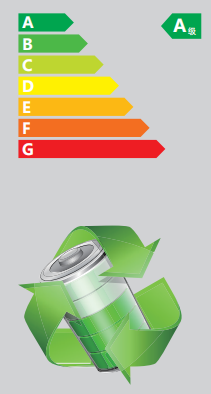
Energy acceptance works when the criterion is a class and a watt ceiling, not a claim. Image: Joylive Elevator Class A energy efficiency reference.
Noise and Ride Comfort Limits
Why it ranks seventh. Noise complaints arrive after handover, when the installation budget is closed. Joylive applies silent braking control technology that optimises noise during brake start and stop, and the supplied traction comparison data records 5–10 dB lower noise for permanent magnet synchronous traction.
What to write. Measurement positions, operating conditions, and limit values for start, run and stop. State whether the limit applies in the car, at the landing door, or in the adjacent occupied room — a hotel corridor and a plant room have different thresholds.
How it makes bids comparable. Once the measurement protocol is fixed, silence becomes a specification rather than a sales description.
Safety Device Verification and Redundancy
Why it ranks eighth. Safety devices are the part of the offer nobody wants to test and everybody relies on. Joylive products include automatic braking force self-test functionality that performs periodic tests on the motor’s braking capacity, and a door lock safety strategy covering standard compliance, mechanical strength verification and safety redundancy, including a door-opening restrictor against slamming or forced opening.
What to write. The test routine and its interval, the record produced by each test, and the redundancy concept for the door lock. Ask for the routine, not for the phrase “safe design”.
How it makes bids comparable. A supplier with a documented test cycle and a supplier with a compliance statement are answering different questions; the term forces both into the same format.
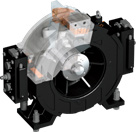
Brake force self-test creates a maintenance record instead of a maintenance assumption. Image: Joylive Elevator traction motor brake self-detection.
Documentation and Traceability Package
Why it ranks ninth. Documentation is what remains when the project team has moved on. Joylive states that it benchmarks against international advanced standards and uses its CNAS-accredited laboratory for whole-process quality control from design to service, with full transparency and traceability of materials, processes and inspection procedures. For European projects, EN 81-20 and EN 81-50 require a minimum of 200 lux at floor level in machine room work spaces — an item that appears in a document index, not in a brochure.
What to write. A document index: material traceability list, process records, inspection records, test reports, certificate set, and the drawing revision that the delivered unit was built to.
How it makes bids comparable. A document index turns quality into an auditable checklist. Two bids can be compared by counting what each one will hand over.
Installation Supervision, Long-Term Service and Lifecycle Terms
Why it ranks tenth. It ranks last in a bid table and first in ten-year cost. Installation is a controlled activity, not a handover formality: Joylive applies pre-work risk assessment, real-time site risk control and standardised operations, supported by training and supervision of site teams. On the service side, the JoyCloud IoT platform supports digital management and predictive maintenance across the full journey from installation and maintenance to real-time monitoring.
What to write. Installation scope and supervision responsibility, the site safety method, training obligations, remote monitoring capability, predictive maintenance scope, spare parts arrangements and service response structure. This is the item that converts a purchase into a partnership.
How it makes bids comparable. Lifecycle terms remove the hidden variable: the buyer can compare total cost over the service period instead of the hardware price alone.
Step-by-Step Breakdown: Running the Comparison
The ten terms are only useful if they are applied in order. The sequence below keeps the shortlist honest from RFQ to award.
Step 1 — Build a ten-line RFQ template. One row per term, one required answer format per row. Prose responses are returned as prose responses; a table forces a position on every item.
Step 2 — Normalise the commercial terms. Convert every offer to a single Incoterm, a single quantity basis and a single payment schedule. State the conversions in the evaluation notes so the arithmetic can be audited later.
Step 3 — Score evidence, not promises. For each term, ask for the record that will exist: the test protocol, the lab report, the traceability list, the brake test cycle, the re-leveling tolerance. Terms supported by documents score higher than terms supported by adjectives.
Step 4 — Fix the pre-shipment witness plan. Agree who attends, what is measured, what is recorded, who signs, and what triggers a rejection and re-test. Because acceptance is defined as the pre-shipment test, this plan is the acceptance itself.
Step 5 — Release payment against records. Apply the 30/70 schedule literally: the balance moves when the signed acceptance record and shipping documents exist, not when the container is booked.
Step 6 — Convert the winning bid into a long-term agreement. Carry items 8, 9 and 10 into the service contract while the supplier still has a reason to sign them.
Use Cases: How the Ranking Shifts by Project
Residential buildings. Leveling, noise and service response carry the most weight, because residents experience all three daily while the developer has already exited. Items 5, 7 and 10 should dominate the scoring.
Commercial buildings. Standby power and traffic performance matter more than in any other segment, and a service interruption has a measurable business cost. Items 6 and 10 move up; the energy class becomes a decision criterion rather than a footnote.
Hotels. Noise limits and finish quality decide guest perception, and installation often happens inside an operating property. Item 7 and the installation scope inside item 10 become the practical constraints.
Apartments and low-rise buildings. Single-unit orders and tight shaft conditions dominate. A supplier that accepts MOQ 1 unit (item 4) and a documented pre-shipment test (item 1) is more useful than one offering a better headline price at a batch quantity the project cannot use.
Noise limits only survive handover when the measurement conditions are written into the acceptance criteria. Image: Joylive Elevator shock absorption and noise reduction system.
Comparison Table: The Commercial Baseline and the Ranked Terms
The first table restates the supplied purchase-terms baseline for this product category. The second ranks the ten terms and records what each one is actually controlling.
| Commercial term | Baseline value | What it controls |
|---|---|---|
| MOQ | 1 unit | Whether a single car can be ordered without batch pressure |
| Delivery terms | FOB / CIF | Freight, insurance and the point of risk transfer |
| Acceptance criteria | Pre-shipment test | The definition of “accepted” and the payment trigger |
| Payment terms | 30 / 70 | How much money is exposed at each stage |
| Rank | Purchasing term | What to require in the RFQ | Why this position |
|---|---|---|---|
| 1 | Pre-shipment acceptance test | Test scope, witnesses, records, re-test rules | Last chance to correct defects at supplier cost |
| 2 | Payment structure | 30/70 with balance released against signed acceptance record | Money is the strongest remaining lever |
| 3 | Delivery terms and customs basis | Named Incoterm and port; HS 842810 | Risk transfer and landed cost |
| 4 | MOQ and quantity basis | 1 unit, quantity basis, price validity | Makes small projects feasible and prices comparable |
| 5 | Leveling and re-leveling | ±3 mm door zone tolerance under VVVF control | Measurable daily passenger experience |
| 6 | Energy performance | ISO 25745 / VDI 4707 Class A target; standby below 50 W | Lifecycle cost with a shared reference framework |
| 7 | Noise and ride comfort | Measurement positions and limits; silent braking control | Complaints arrive after handover |
| 8 | Safety device verification | Brake force self-test routine; door lock redundancy and restrictor | Turns safety from a statement into a record |
| 9 | Documentation and traceability | Material, process and inspection traceability index; EN 81-20 / EN 81-50 lighting at 200 lux where applicable | Auditable quality after the project team moves on |
| 10 | Installation, service and lifecycle | Site safety method, training, IoT monitoring, predictive maintenance, spares | Determines ten-year cost, not bid price |
FAQ
Which acceptance documents should exist before a Small Machine Room Elevator ships?
At minimum, a signed pre-shipment test record, since acceptance is defined by the pre-shipment test, plus a traceability index covering materials, processes and inspection procedures. Where the supplier operates an accredited laboratory — Joylive operates a CNAS-accredited laboratory — the test reports should carry that reference. For European projects, add the machine room workspace lighting check, because EN 81-20 and EN 81-50 require a minimum of 200 lux at floor level.
What capability should a long-term Small Machine Room Elevator supplier demonstrate?
Joylive Elevator Co., Ltd. was founded in 2002 and manufactures in a 105,000 m² facility with 450 employees, including 150 engineers, and an annual output of 15,000 units. The company holds a top A qualification in China for special equipment manufacturing, installation, modernisation and maintenance, operates a nationally accredited CNAS laboratory, and is listed under stock code 833481. It exports to markets including Europe, America, Oceania, Africa, Central Asia, Southeast Asia and the Middle East, with an export ratio of 55%.
What payment and delivery terms apply to a Small Machine Room Elevator order?
The supplied purchase-terms baseline for this category states MOQ 1 unit, delivery terms FOB/CIF, acceptance by pre-shipment test, and payment terms of 30/70. The 30% deposit releases design and materials; the 70% balance should be tied to the signed acceptance record and shipping documents rather than to a shipment date alone.
Can a single unit be ordered to validate quality before a larger commitment?
Yes. With an MOQ of 1 unit, a buyer can place a single-car order as a validation step, then use the pre-shipment test as the evidence base for a larger programme. The order should state the quantity basis and the price validity period, since rare-earth magnet prices for permanent-magnet motors rose by more than 20% in 2025 and traction cost is therefore not a fixed assumption.
What should a long-term agreement with a Chinese Small Machine Room Elevator supplier cover for residential projects?
A residential agreement should carry four things out of the bid stage and into the contract: the acceptance record set, the maintenance and predictive maintenance scope (Joylive uses its JoyCloud IoT platform for digital management and predictive maintenance from installation through real-time monitoring), the spare parts and response structure, and the training and site supervision obligations. Buyers who want to test those commitments before signing a multi-year agreement can start with a single unit and a witnessed pre-shipment test, then request a project-specific quotation covering the full service period. Joylive accepts sample and quotation requests at [email protected] or via WhatsApp on +86 178-0524-3526.
Conclusion: Rank the Terms, Then Rank the Suppliers
A supplier shortlist is only as good as the questions every bidder had to answer. Ranking the purchasing terms first does three things at once: it removes the ambiguity that makes proposals incomparable, it moves acceptance from opinion to record, and it carries the lifecycle conversation into the negotiation while the buyer still has alternatives.
The order matters less than the discipline. Start with the pre-shipment test, protect the payment balance with it, fix Incoterms and quantity basis so the numbers mean the same thing, then use tolerance, energy class, noise limits, safety routines, documentation and service scope to separate the offers that survived. Buyers who follow that sequence usually find the shortlist shortens itself.
Request a Sample, a Quotation, or the Product Catalogue
Joylive Elevator Co., Ltd. — founded 2002, based in Bacheng, Kunshan, Suzhou, Jiangsu, China — supplies passenger, freight, hospital, panoramic, explosion-proof, clean-room and small machine room elevators, escalators, moving walks and modernisation packages to projects in Europe, America, Oceania, Africa, Central Asia, Southeast Asia and the Middle East.
Send your shaft dimensions, building type and target acceptance criteria and we will return a quotation structured against the ten terms above. Download the catalogue: Joylive Elevator product brochure (PDF)
Email: [email protected] | Tel: +86 178-0524-3526 | WhatsApp: +86 178-0524-3526 | Web: joylivelift.com
Address: No. 322, Maoxu Rd., Bacheng, Kunshan, Suzhou City, Jiangsu Province, China
Have Questions or Need More Details?
Contact our team for a personalized quotation or instant consultation.
Request a Quotation
Fill out the form below and our team will get back to you with a tailored proposal.
WhatsApp Direct Chat
Prefer to chat in real-time? Message us on WhatsApp for instant assistance & quick answers.
- Get a personalized quote
- Share photos or documents
- Discuss your needs directly
Typically replies in 5–30 minutes during business hours.