
Ranked: 7 Industrial Elevator Purchasing Terms for Freight Elevator Acceptance
Freight elevator acceptance usually fails on paper before it fails on site. A machine can lift its rated load and still leave the buyer with no contractual trigger to withhold payment, demand re-work, or record a defect, because the contract never defined what “accepted” means.
This guide ranks seven purchasing terms in the order in which they can block acceptance of an industrial freight elevator. The order is an editorial priority sequence built around the handover process: a term that decides whether the equipment may legally enter service comes before a term that affects finish quality. It is not a market ranking, a supplier rating, or a performance comparison between products.
Each entry answers four questions: why the term matters, what to write into the contract, how to verify it at handover, and which acceptance evidence to request. Statements about Joylive Elevator Co., Ltd. are limited to the company's published material and the certification records supplied with this brief, and are described as company-reported where that is what they are.
- Conformity scope and certificate identity
- Rated load, rated speed and the measurement definition
- Shaft, car and door interface
- Control, integration and smart-interface scope
- Test, inspection and the acceptance evidence pack
- Scope of supply, lead time and milestone schedule
- After-sales, spare parts and digital-service terms

Why freight elevator acceptance disputes begin in the contract
A freight elevator is a project product. It is engineered against a shaft, a load profile, a traffic pattern and a jurisdiction, then installed and inspected on site. That structure creates four recurring gaps between what the buyer expects and what the contract can enforce.
- Adjective specifications. Terms such as “heavy-duty”, “durable” or “premium” describe intent, not acceptance. If the contract does not attach a number, a unit and a test method, the supplier can meet the wording and the buyer still cannot prove a shortfall.
- Certificate scope treated as model coverage. A certificate names a scope: a lift category, a standard, sometimes a rated load and speed. It does not automatically cover every model in a manufacturer's portfolio, and a certificate issued for an adjacent product category cannot support a freight elevator claim.
- An undefined equipment category. Joylive states that some freight elevator models may support dual use for passengers and freight, subject to local safety regulations and specific design standards. That is a condition, not a default: dual use changes the applicable conformity route, the documentation and the design review, so it must be decided before the contract, not at handover.
- No defined evidence pack. Acceptance needs a list: which tests, which reports, which certificates, which signatures, which defect thresholds, and which payment milestone each item unlocks. Without that list, handover becomes a negotiation.
What the compliance landscape requires before acceptance
Freight elevator conformity is jurisdiction-specific, and the frameworks most often named in international procurement are not interchangeable:
- European Union: Directive 2014/33/EU harmonises Member State law on lifts; EN 81-20:2020 sets safety rules for passenger and goods passenger lifts, and EN 81-50:2020 covers design rules, calculations, examinations and tests of lift components.
- International: ISO 8100-1:2019 and ISO 8100-2:2019 provide the corresponding international framework; as voluntary standards they take effect through national adoption rather than by themselves.
- North America: ASME A17.1-2019/CSA B44-19 is a model code that becomes binding only where the state, provincial or local authority having jurisdiction adopts it.
- China: GB/T 7588.1-2020 sets national safety rules for passenger and goods passenger lifts, and elevators are regulated as special equipment under the Special Equipment Safety Law of the PRC, in force since 1 January 2014.
One assessment follows from these scope differences: a single freight elevator configuration is unlikely to be marketable unchanged across the EU, North America and China, because each framework imposes a different conformity route. The practical consequence is that the buyer's first contractual act is to name the destination market and its route, rather than to compare generic “CE-equivalent” claims.
The equipment category is equally decisive. The European framework addresses goods passenger lifts in EN 81-20, while goods-only lifts fall under a separate scope. Whether personnel may ride with the load therefore changes the standard, the type-examination route and the cost, which is why the dual-use question belongs in the contract instead of the brochure.
Two third-party forecasts explain why digital-service clauses now appear in freight elevator contracts. Commercial research projects the industrial elevator segment at USD 12.24 billion in 2025, growing at a 5.80% CAGR to USD 18.16 billion by 2032 (Ken Research), and the elevator IoT solution segment at USD 17.97 billion by 2034 at a 14.2% CAGR (Dataintelo). These are projections, not acceptance criteria, and they should not be used to justify a specification.
Customs classification is a separate documentation task. HS 8428.10 covers “lifts and skip hoists” as an aggregate that includes skip hoists, so it is a classification fact rather than a freight-elevator-specific trade series.
How the ranking was ordered
The sequence follows the cost of discovering a gap too late. Ranks 1 and 2 decide whether the equipment can legally enter service and whether its core performance can be measured. Ranks 3 to 5 decide whether the installation can be accepted objectively. Ranks 6 and 7 decide whether the asset stays operable and supportable after the acceptance certificate is signed. A buyer with limited negotiating time should secure the earlier ranks first.
1. Conformity scope and certificate identity
Rank 1 answer: fix the market, the directive or standard, the equipment category and the certificate number in the contract before price is discussed.
Why it matters. A certificate is a scope document. It states what was examined, against which standard, by which body, and until when. Acceptance can be blocked by a certificate that is genuine but out of scope, for example one issued for a passenger lift when the order is a freight elevator.
Write into the contract. The destination market or jurisdiction; the directive or standard the equipment must satisfy; the equipment category (goods-only, goods passenger, or dual use); the certificate number and issuing body; the validity period; and a clause requiring that the certificate cover the supplied configuration, not merely the manufacturer's product family.
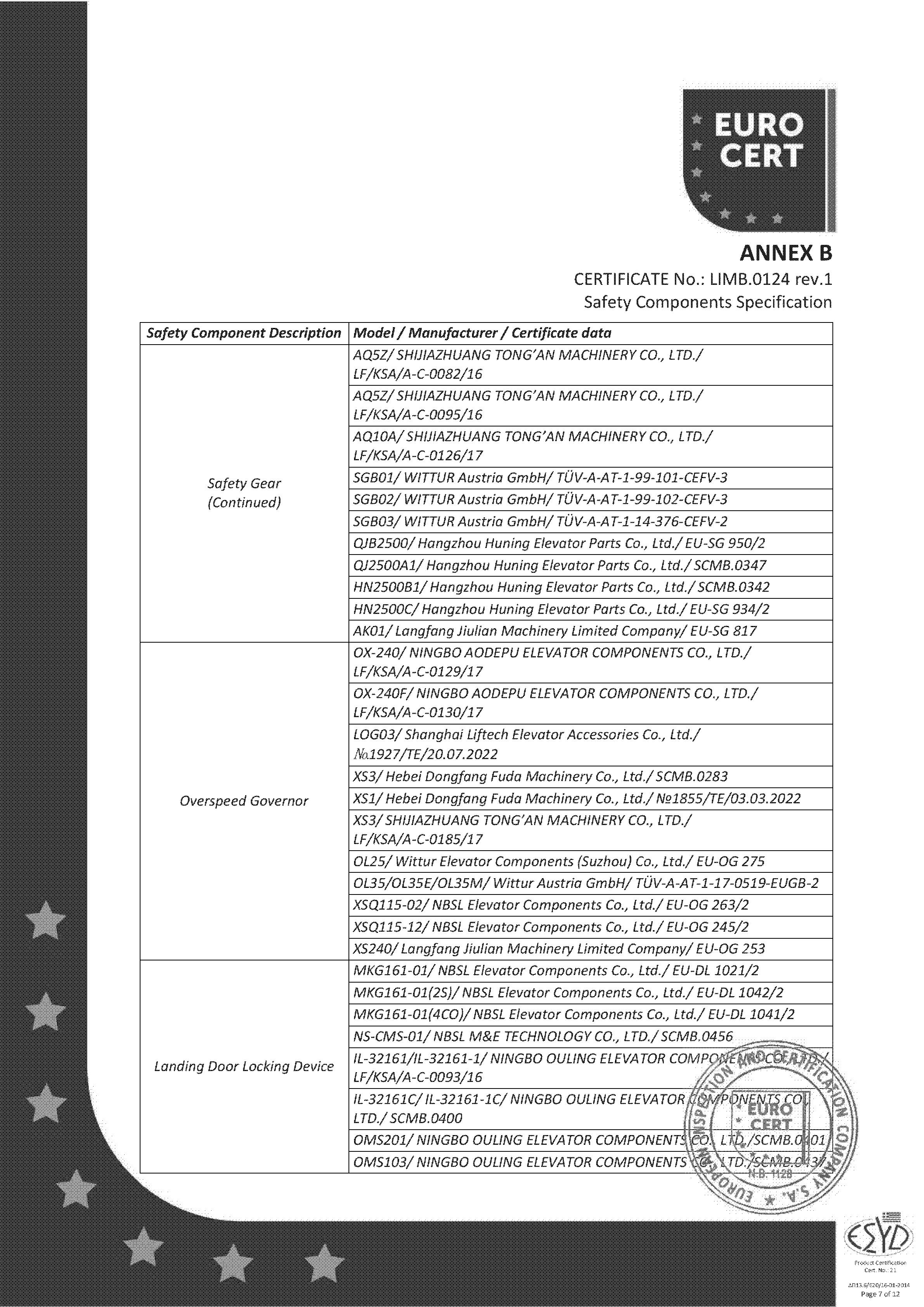
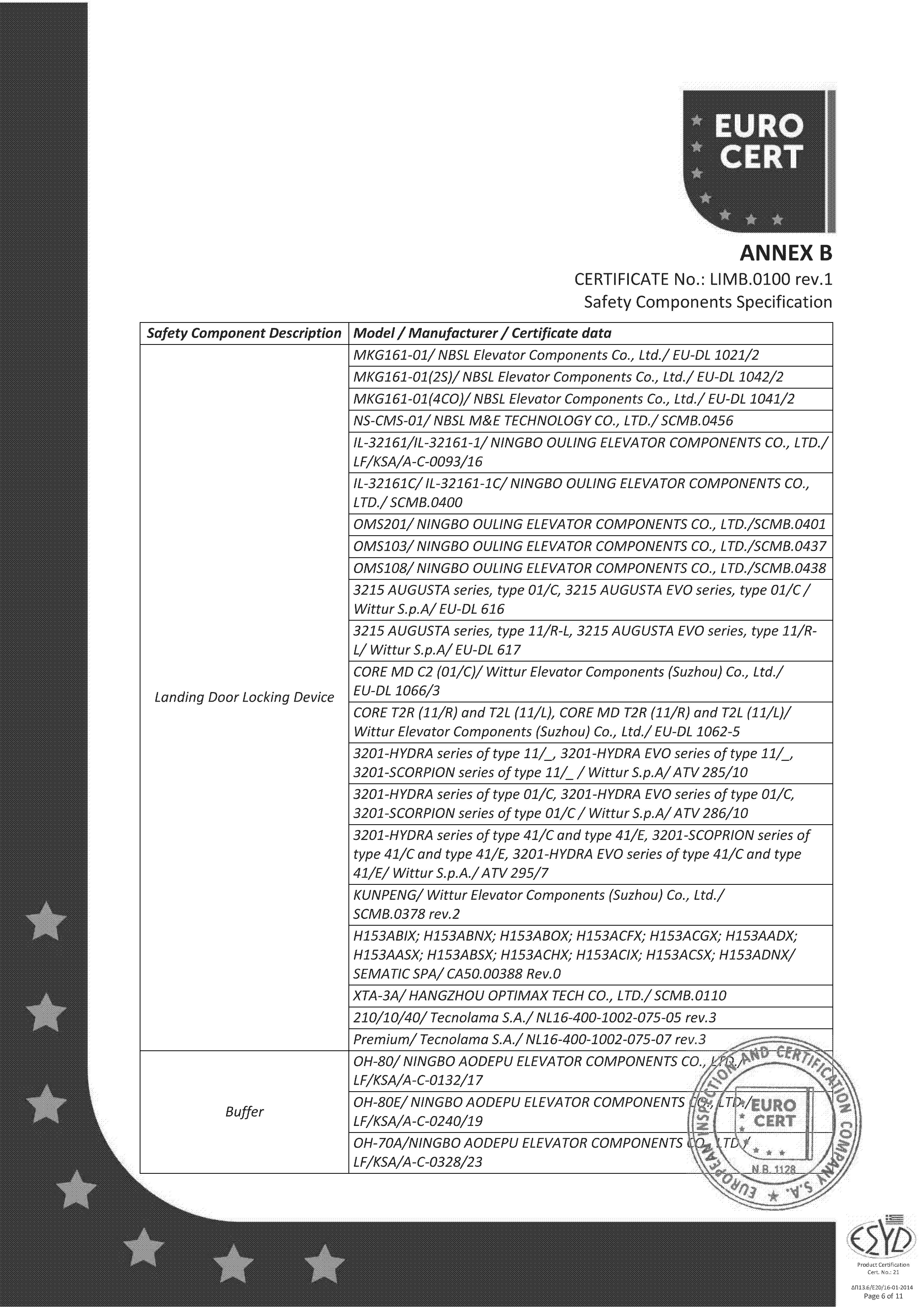
Verify at handover. Take the certificate copy and check four fields against the contract: certificate number, issuing body, scope line and expiry date. The records supplied with this brief show why the scope line matters. Joylive's EU type-examination certificate LIMB.0124 rev.1, issued by EURO CERT on 24 July 2024 against Directive 2014/33/EU, EN 81-20:2020 and EN 81-50:2020, states its scope as “Machine Room Goods Passenger Lift”; the machine-roomless counterpart, LIMB.0100 rev.1, states “Machine Roomless Goods Passenger Lift”. Management-system registrations are separate evidence: ISO 9001:2015 registration STQ10021-00 issued by AFNOR Asia Ltd covers design, manufacturing, sales, installation and maintenance and runs to 9 August 2027, while the ISO 14001:2015 registrations run to 31 July 2027.
Scope can be narrower still. Joylive's energy-efficiency certificate 10.16.2281, issued by EURO CERT against VDI 4707 part 1 and valid to 29 September 2029, is scoped to a machine-room passenger lift at a stated load and speed. It supports an energy claim for that passenger lift category, not for a freight elevator.
Evidence to request. Signed certificate copies with scope pages, validity confirmation, and a written statement that the certificate covers the offered model and configuration.
Withhold acceptance when. The certificate number cannot be verified with the issuing body, the scope does not match the supplied category, or the certificate expires before the planned acceptance date.
2. Rated load, rated speed and the measurement definition
Rank 2 answer: state rated values as numbers with units, tolerances and a measurement method, and attach the offered model's datasheet as a contract annex.
Why it matters. A published range describes a product family, not the unit being delivered. Joylive's commercial page publishes a freight elevator load range of 1,000 to 20,000 kg and a rated speed range of 0.25 to 3.0 m/s, while its published F200/F300 series data states payloads of 1,000 to 5,000 kg with levelling accuracy of ≤5 mm. These are different publications at different levels. Neither establishes that a specific offered model sits at either end of any range, and a published range is not a market benchmark.
Write into the contract. Rated load in kilograms; rated speed in metres per second; levelling accuracy in millimetres; the load conditions and travel height at which each value is measured; the permitted tolerance; the measuring instrument and pass/fail rule; and the datasheet revision the values come from.
Verify at handover. Compare the signed datasheet with the quotation configuration, then with the as-built unit: load, speed, car size and door clear opening should match the annex, not the brochure. Confirm that levelling accuracy was measured under the stated conditions rather than quoted as a general figure.
Evidence to request. Model-level datasheet, factory test records for rated and overload conditions, and levelling accuracy measurement records.
Withhold acceptance when. The contract describes the product only as “heavy-duty” or “high capacity” with no numeric rating, or the delivered unit's nameplate does not match the annex.
3. Shaft, car and door interface
Rank 3 answer: freeze the physical interface — shaft dimensions, pit, headroom, machine-room or machine-roomless arrangement, travel height, car size and door configuration — in a signed general arrangement drawing.
Why it matters. Interface errors are the most expensive kind, because they surface after civil works are complete. Joylive lists speed, load, travel height, car size, car decoration, logo and step width among its customization variables, which means these values are fixed at order stage and are not interchangeable once production begins.
Write into the contract. The signed general arrangement drawing as an annex; shaft clear dimensions, pit depth, overhead clearance and reserved openings; machine-room or machine-roomless arrangement; travel height; car clear dimensions; door type and clear opening; the tolerance allowed on civil deviations and who rectifies them; the shaft handover date and its acceptance conditions; and who re-measures the shaft before release for production.
Verify at handover. Re-measure the shaft against the drawing, log every deviation, and confirm that the door opening matches the real material flow — pallet sizes, forklift access and turning space — rather than the nominal drawing.
Evidence to request. The signed arrangement drawing, a shaft handover checklist, and a re-measurement record signed by both parties.
Withhold release for production when. The drawing is unsigned, the shaft has not been measured, or the deviation log is open with no agreed rectification owner.
4. Control, integration and smart-interface scope
Rank 4 answer: convert “smart” and “AGV-ready” into a signal list, a protocol, a test script and a named owner for each side of the interface.
Why it matters. JoyLive states that its elevator and AGV can be intelligently linked to connect horizontal and vertical factory transportation, and that its systems can handle oversized and overweight goods. That is a company-reported capability statement without published test conditions, cycle-time data or independent validation. It is useful for screening a solution direction, but it cannot serve as an acceptance criterion until the interface is specified.
Write into the contract. The interface protocol and version; the input and output signal list; the linked operating scenarios (call, arrival, door state, fault and fallback); timeout and recovery behaviour; the responsibility boundary between the elevator supplier, the AGV or conveyor integrator and the controls contractor; the integration test script and its pass criteria; and data ownership plus remote-access permissions.
Verify at handover. Have the integrator co-sign the interface document, then run the test script on site and record timestamps, fault injections and recovery results. A demonstration is not a test; insist on the recorded result.
Evidence to request. Interface specification, integration test report, integrator sign-off, and a sample of the monitoring data the system will expose.
Withhold acceptance when. The specification says “AGV-ready” with no protocol document, or no party is named as responsible for the link.
5. Test, inspection and the acceptance evidence pack
Rank 5 answer: define the evidence pack in the contract — factory tests, site inspection, statutory inspection, defect grading, retention, and the exact documents that release final payment.
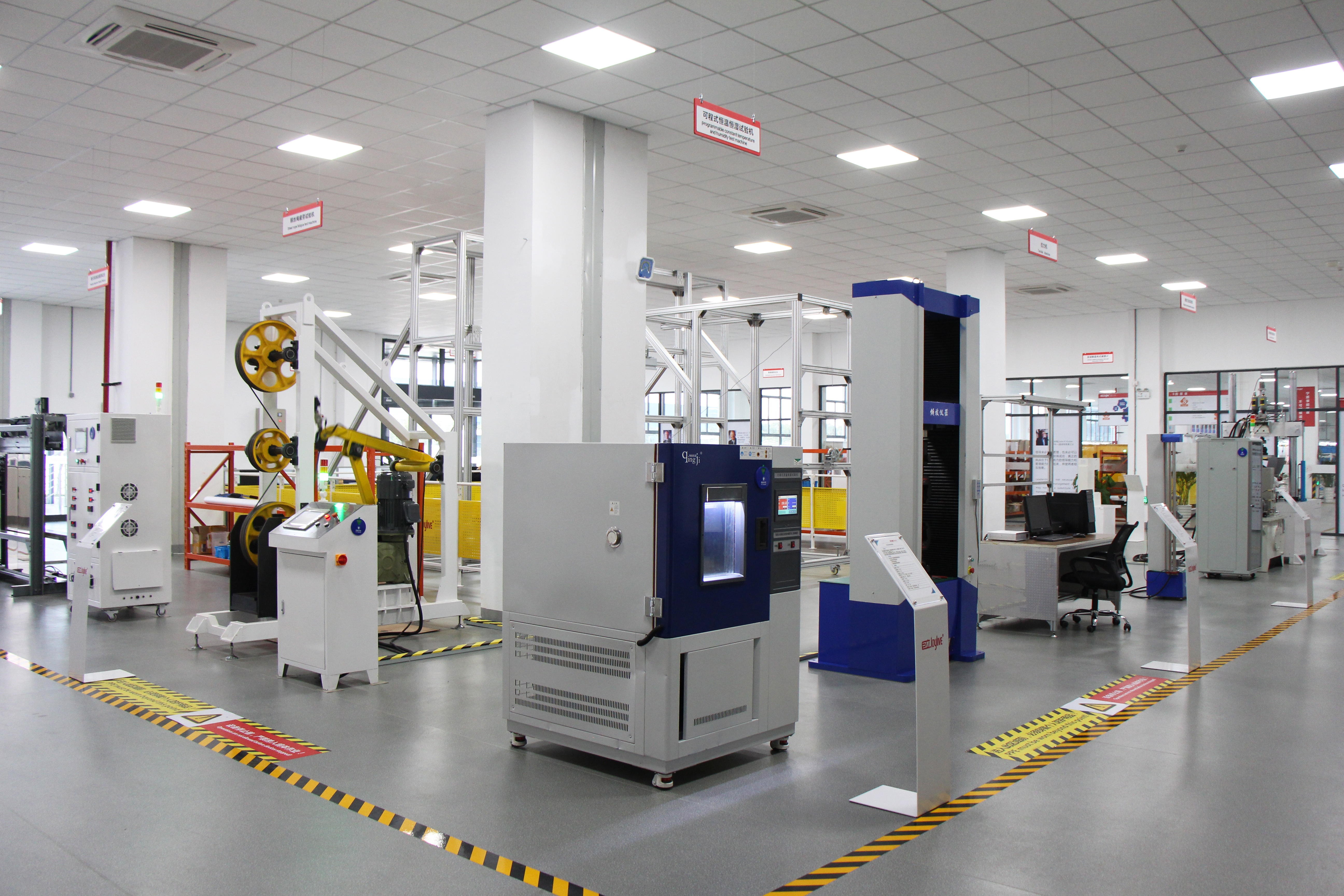
Why it matters. Factory quality control and buyer acceptance are different things. Joylive states that it applies 100% testing as its quality-control method, which describes a factory routine; it does not state what is tested, who witnesses it, or which result counts as a pass. Those three items belong to the buyer's acceptance definition.
Write into the contract. The factory acceptance test list and the buyer's right to witness; site inspection items and the responsible inspector; who applies for statutory inspection, who pays, and what happens if it fails; defect grading with rectification deadlines; the retention percentage and the exact conditions for release; and the document list that must be complete before handover.
Verify at handover. Check the pack item by item rather than accepting a folder. Confirm that statutory inspection has passed in the destination jurisdiction, not only at the factory, and that as-built drawings reflect site changes.
Evidence to request. Factory test reports, installation self-inspection records, the statutory inspection certificate, as-built drawings, the operating manual, the electrical schematic, certificate copies, and operator training records.
Withhold acceptance when. Any listed document is missing, statutory inspection is incomplete, or a graded defect remains open beyond its deadline.
6. Scope of supply, lead time and milestone schedule
Rank 6 answer: write the delivery boundary and the time basis, then tie every payment milestone to a verifiable event.
Why it matters. Published commercial terms describe capacity, not a project schedule. Joylive reports a monthly capacity of 1,250 units, a lead time range of 7 to 45 days and a minimum order quantity of 1 unit. Those figures describe a manufacturing range; they do not automatically include transport, site installation, commissioning or statutory inspection, and the position within that range depends on configuration and documentation.
Write into the contract. The Incoterms rule and named place; packaging and marking requirements; who arranges and pays for transport, insurance, unloading and hoisting; installation and commissioning scope; who files the statutory inspection application; milestone dates with named deliverables; delay remedies; and payment nodes tied to milestones rather than calendar dates.
Verify at handover. Match the shipping documents, packing list and nameplate against the contract annex, then confirm the milestone log is signed at each stage. HS 8428.10 may appear on the customs paperwork as the classification for lifts and skip hoists; it is a classification entry, not a description of the specific unit.
Evidence to request. Production progress reports, packing list, shipping documents, and a signed arrival inspection record covering quantity and visible damage.
Withhold the next payment milestone when. The milestone event is undocumented, or the delivered configuration differs from the annex without a written change order.
7. After-sales, spare parts and digital-service terms
Rank 7 answer: convert service promises into measurable obligations — response time, spare-parts horizon, maintenance scope, data ownership and software support.
Why it matters. A freight elevator is a long-lived asset whose cost of downtime usually exceeds the cost of the parts involved. Joylive reports online and offline technical support together with a 24/365 hotline. A hotline statement is a channel, not a service level; it becomes enforceable only when paired with response and attendance times, spare-parts coverage and maintenance scope.
Write into the contract. Response and attendance times by severity level; the critical spare-parts list and the number of years it will be stocked; maintenance frequency and content; software and firmware update policy; remote monitoring scope, data ownership, access rights and retention; cybersecurity responsibilities; and the format of the service record the supplier must deliver after each visit.
Verify at handover. Obtain the service agreement, the spare-parts list and the escalation contact sheet, and confirm that the monitoring system the site will actually use is the one named in the contract.
Evidence to request. Service agreement, spare-parts list, maintenance plan, escalation matrix and a sample service record.
Withhold acceptance when. The after-sales clause consists of a hotline number with no response obligation, or remote monitoring is promised with no data or access terms.

Step by step: from term sheet to signed acceptance
The seven terms become usable when they are sequenced into the handover process. The steps below keep each term verifiable at the moment it can still be corrected.
- Declare the equipment category. Decide whether the unit is goods-only, goods passenger or dual use. Output: a written category statement in the contract, because it drives the conformity route.
- Map the destination market to its framework. Name the directive, standards or code, and the authority that will inspect. Output: a one-page compliance matrix attached to the contract.
- Lock model-level performance values. Attach the offered model's datasheet with load, speed, levelling accuracy and the measurement method. Output: a signed technical annex.
- Freeze the physical interface. Sign the general arrangement drawing after re-measuring the shaft. Output: a signed drawing and a closed deviation log.
- Specify the integration interface. Agree protocol, signal list and test script with the integrator. Output: a co-signed interface document.
- Define the evidence pack and defect rules. List every document, test and certificate with grading and deadlines. Output: an acceptance annex that names the retention release conditions.
- Run factory tests and the pre-shipment check. Witness what the contract allows you to witness and record the results. Output: factory test report and pre-shipment inspection record.
- Complete site work, statutory inspection and linked testing. Only then sign acceptance and release retention. Output: inspection certificate, integration test record, acceptance certificate and the full document pack.
Steps 1 to 3 can run in parallel with commercial negotiation; steps 4 to 6 must be closed before release for production; steps 7 and 8 belong to delivery. A buyer who reaches step 7 with steps 1 to 6 still open has effectively agreed to accept whatever arrives.
Where the ranking shifts: three buyer situations
Multi-site factory expansion. When one freight elevator specification is repeated across buildings or countries, ranks 2 and 5 carry the most leverage, because a model-level annex and a standard evidence pack can be reused site by site. Joylive's published project references include 9 passenger and freight elevators for Inventec in Mexico, 87 units for Pegatron in Vietnam and 36 units for Wistron in Vietnam, each reported as stable operation over project durations of one, two and five years respectively. Those references describe delivery experience on multi-unit factory projects; they are not evidence that any particular acceptance term produced a given outcome.
Retrofit or space-constrained buildings. Where no machine room is available, the machine-roomless configuration moves to the centre of the conformity discussion. The separate machine-room and machine-roomless type-examination scopes in the supplied records show why certificate scope must match the arrangement actually installed. Here rank 3 also rises, because shaft tolerances in an existing building are the most likely source of delay.
Hazardous-area projects. If the elevator serves a classified area, rank 1 dominates. Industry guidance on explosion-proof elevators points to ATEX requirements under Directive 2014/34/EU for equipment used in hazardous environments. A manufacturer listing explosion-proof elevators in its portfolio does not by itself establish that the specific unit carries the conformity evidence your jurisdiction requires, so the contract should name the zone classification, the applicable scheme and the documents to be provided. This is a verification requirement, not a statement about any supplier's certification status.
Acceptance evidence matrix
The table condenses the seven terms into what the contract must state and what must exist at handover.
| Rank | Term | Contract must state | Evidence at handover |
|---|---|---|---|
| 1 | Conformity scope | Market, directive or standard, equipment category, certificate number, issuing body, validity | Certificate copies with scope pages; validity confirmation; coverage statement for the offered model |
| 2 | Rated load and speed | Values with units, tolerances, test conditions, measurement method, datasheet revision | Model datasheet; factory load and overload test records; levelling accuracy records |
| 3 | Physical interface | Shaft, pit, headroom, travel, car and door dimensions; deviation tolerance and responsibility | Signed arrangement drawing; shaft handover checklist; re-measurement record |
| 4 | Control interface | Protocol, signal list, linked scenarios, timeout behaviour, ownership, test script | Co-signed interface document; integration test report; monitoring data sample |
| 5 | Test and evidence pack | Factory test list, witness right, statutory inspection responsibility, defect grading, retention release | Factory test reports; statutory inspection certificate; as-built drawings; manuals; training records |
| 6 | Scope and schedule | Incoterms, packaging, transport, installation scope, milestone dates, delay remedies | Progress reports; packing list; shipping documents; arrival inspection record |
| 7 | After-sales and digital service | Response and attendance times, spare-parts horizon, maintenance scope, data and software terms | Service agreement; spare-parts list; maintenance plan; escalation matrix; sample service record |
Frequently asked questions
Which purchasing term should be settled first when buying a freight elevator?
Conformity scope. Until the destination market, the applicable directive or standard and the equipment category are fixed, every other term is provisional, because the category determines which conformity route and documentation apply. Commercial negotiation can continue in parallel, but the technical annex should not be signed while the conformity route is unresolved.
Does a CE type-examination certificate cover every freight elevator a supplier offers?
No. A certificate states a scope, and the scope can be narrower than a product portfolio. In the records supplied here, LIMB.0124 rev.1 is scoped to a machine-room goods passenger lift and LIMB.0100 rev.1 to a machine-roomless goods passenger lift, both issued by EURO CERT against Directive 2014/33/EU, EN 81-20:2020 and EN 81-50:2020. Buyers should check the scope line, issuing body and expiry date against the configuration actually ordered.
Can a freight elevator carry passengers and goods at the same time?
It depends on the model and the jurisdiction. Joylive states that some freight elevator models may support dual use, but that such applications must comply with local safety regulations and specific design standards. Because dual use changes the applicable standard and type-examination route, the answer must be confirmed in writing for the destination market before the contract is signed.
How should rated load and speed be written so they can be verified?
As numbers with units, tolerances, test conditions and a measurement method, supported by the offered model's datasheet as a contract annex. A published family range is not a model rating: Joylive publishes a freight elevator range of 1,000 to 20,000 kg and 0.25 to 3.0 m/s, and separately publishes 1,000 to 5,000 kg with ≤5 mm levelling accuracy for its F200/F300 series. The delivered nameplate should match the annex value.
What cost items belong in a freight elevator contract?
The contract should allocate, item by item, equipment, packaging, transport and insurance, unloading and hoisting, installation and commissioning, statutory inspection fees, operator training, spare parts and maintenance. This guide does not quote price levels, because no verified price, cost or quotation data was available for the freight elevator categories discussed; the contract's job is to state which party bears each cost, not to assume a market rate.
Can buyers witness factory testing before shipment?
A witness right is a contractual item, not an automatic entitlement. It should be written as a named test list, a notice period and a recording format, so the buyer sees the tests that matter — rated load, overload, levelling accuracy and any linked-interface test — rather than a general demonstration. Where travel is impractical, a recorded test with instrument readings is a reasonable substitute if the contract says so in advance.
What must be in place before final payment and retention release?
At minimum: certificate copies whose scope matches the delivered configuration, the signed technical annex and as-built drawings, factory and site test records, passed statutory inspection in the destination jurisdiction, a closed defect log, and the operating and maintenance documents. Retention should release against those named items rather than against the passage of time. Buyers who want the full technical file before shortlisting can review the range and documentation on the Joylive Elevator website.

Conclusion: acceptance is a document set, not a moment
Freight elevator acceptance is decided by what the contract can prove. The seven terms ranked here follow one logic: secure the legal basis first, make performance measurable second, freeze the physical and control interfaces third, then define the evidence and the commercial consequences that follow from each. Buyers who order their negotiation this way enter handover with a checklist instead of an argument.
The most common failure is not a weak supplier; it is a contract that describes a category instead of a unit. A certificate without a scope check, a load range without a model rating, and a hotline without a response time all survive signature and fail at acceptance. Correcting them before release for production costs a document revision; correcting them afterwards costs a schedule.
For buyers building a shortlist, the same seven terms work as a screening questionnaire: certificate scopes, a model-level datasheet, a standard interface document and a sample evidence pack. Suppliers who answer with documents move forward; suppliers who answer with adjectives do not.
To review the Joylive freight elevator range, certification records and company profile, download the Joylive product brochure (PDF) or visit joylivelift.com.
Have Questions or Need More Details?
Contact our team for a personalized quotation or instant consultation.
Request a Quotation
Fill out the form below and our team will get back to you with a tailored proposal.
WhatsApp Direct Chat
Prefer to chat in real-time? Message us on WhatsApp for instant assistance & quick answers.
- Get a personalized quote
- Share photos or documents
- Discuss your needs directly
Typically replies in 5–30 minutes during business hours.