Passenger Elevators 101: Core Concepts for Smart Buildings and Modern Living
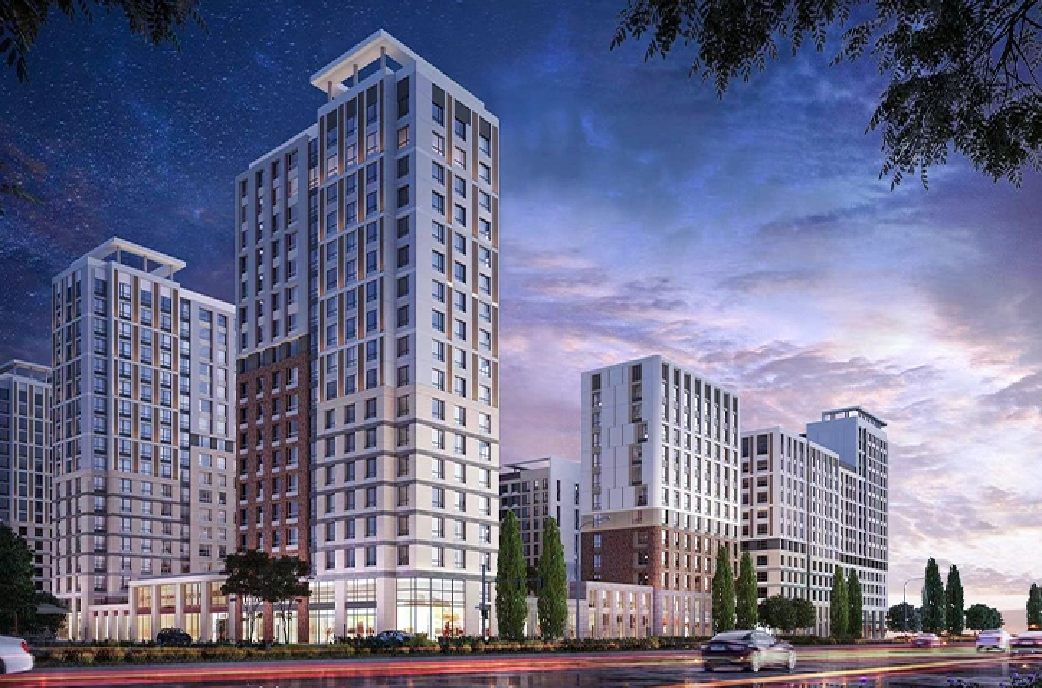
A passenger elevator is a permanently installed lifting installation that carries people between defined landing levels inside a building, and it is engineered, regulated and certified as safety equipment rather than as a household appliance. This guide explains the concepts a first-time buyer actually needs: what the main components do, how a traction system moves a car safely, how a passenger elevator differs from a home lift, how the different product families map to building types, and which purchasing terms and acceptance criteria should appear in a first order.
Why the Basics Still Matter in 2026
Most procurement problems in this category start with vocabulary, not with price. A buyer who asks for 'an elevator' may receive a quotation for a home lift, a platform lift or a goods lift, because those are different product categories with different standards, different inspection routes and different life-cycle costs. The same buyer may accept a marketing phrase such as 'energy-saving' or 'CE certified' without asking which standard, which certificate number, which product scope and which destination market it refers to.
The confusion is expensive in three specific ways. First, an RFQ built on the wrong product category produces quotations that cannot be compared, because each bidder has priced a different scope. Second, an acceptance test that was never defined in writing leaves the buyer with no objective basis for accepting or rejecting the delivered unit. Third, a certification that covers one product family does not automatically cover another, so a project can reach installation stage before the compliance gap becomes visible.
Industry Background: Three Forces Reshaping the Category
Three separate market forces are visible in the published research, and each one changes what a buyer should ask for.
The first is scale. Roland Berger's 2026 update to its Elevator Market Outlook 2030 values the global elevator market at USD 110 billion in 2025, covering new equipment, maintenance and modernization. That figure describes the whole industry rather than the passenger elevator segment alone, but it explains why the category attracts so many suppliers and why specification discipline matters.
The second is the shift toward existing buildings. The same outlook identifies modernization as the fastest-growing business line, with a CAGR of around 7% through 2030. For buyers, this is a signal about supplier capability: a manufacturer that only sells new equipment is a different partner from one that can also modernize, re-certify and maintain an existing installation.
The third is digital and energy integration. One commercial research estimate projects the global smart elevator market reaching USD 40.26 billion by 2035 at a CAGR of 9.02%. Estimates of this kind are directional rather than precise, but the direction is consistent with what suppliers now publish: connected controllers, remote monitoring, energy classification and building-system integration are presented as product features rather than as optional extras.
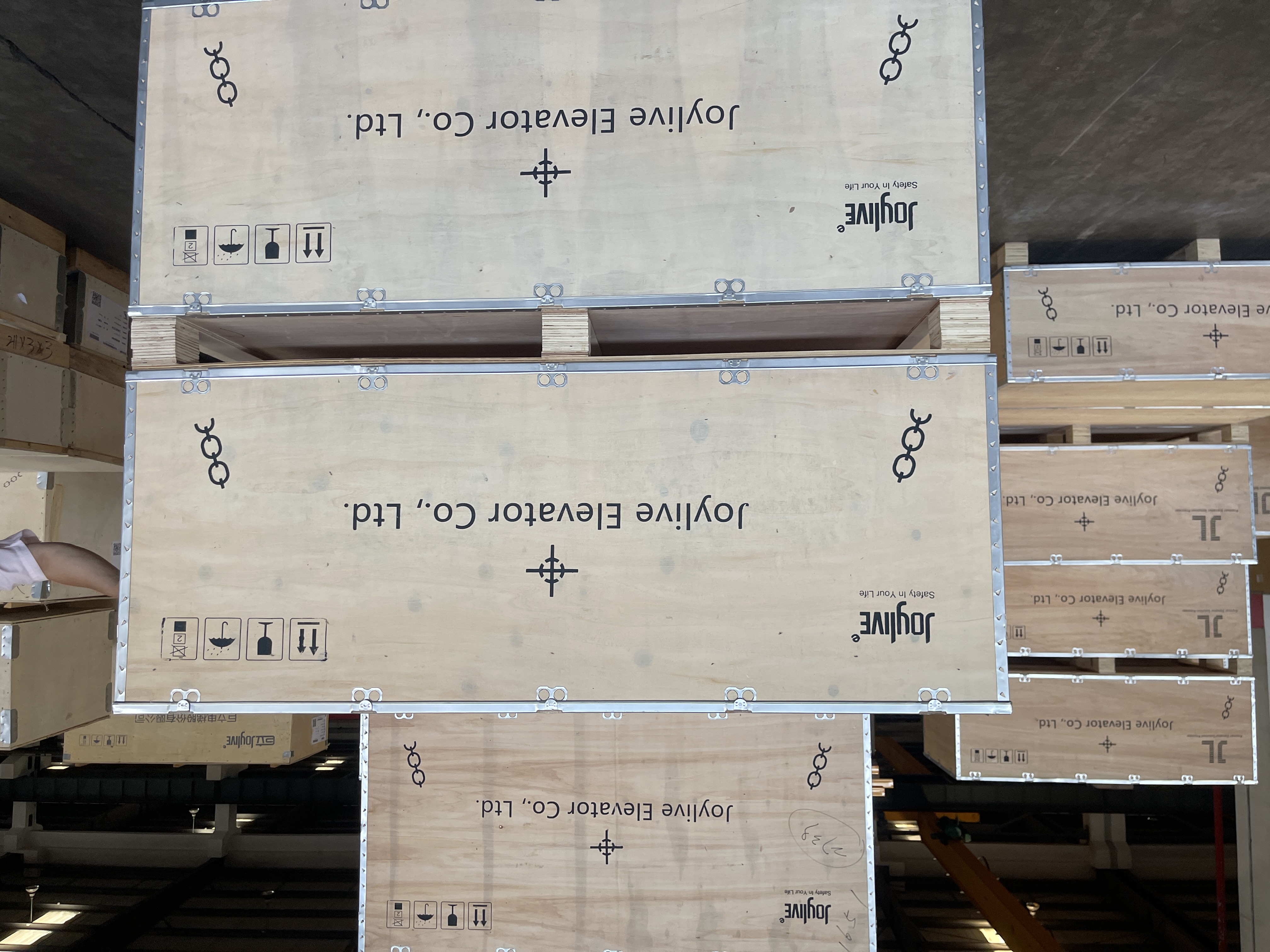
Joylive Elevator Co., Ltd. is one example of a manufacturer positioned across all three forces. Founded in 2002 and based in Bacheng Town, Kunshan City, Suzhou, Jiangsu Province, China, the company operates a 105,000 m² manufacturing base with around 450 employees, an annual output of 15,000 units, a 150-engineer R&D team and an export ratio of 55%. It holds a top A qualification in China for special equipment manufacturing, installation, modernization and maintenance, and operates a nationally accredited CNAS laboratory. Its product list spans passenger elevators, freight elevators, home lifts, fire elevators, panoramic elevators, hospital elevators, small passenger elevators, escalators, moving walks, dumbwaiters, elevator modernization and IoT devices, among others.
The Anatomy of a Passenger Elevator
Understanding the component list is the fastest way to read a technical schedule and to spot the questions a supplier has not answered. A traction passenger elevator is built from the following functional groups.
- Car and sling. The enclosure that carries passengers, plus the structural frame that transfers load to the guide rails and suspension. Car size and internal decoration are among the items buyers most often customize.
- Car door and landing doors. The landing doors are the safety boundary between the passenger and the shaft; their operation and interlocking are central to any acceptance test.
- Guide rails and brackets. These keep the car and counterweight on a controlled vertical path and absorb the horizontal forces generated during travel.
- Traction machine. The drive unit that moves the suspension means. Its location defines the two main architectural configurations: machine-room (MR) and machine-roomless (MRL).
- Suspension means and counterweight. The counterweight balances the car, which is why the motor does not have to lift the full rated load.
- Controller and drive. The cabinet that manages start, acceleration, deceleration, levelling and door sequencing, and that increasingly connects to building management systems.
- Safety chain. Overspeed governor, safety gear, buffers and the electrical safety circuit that stops the machine if a monitored condition is abnormal.
- Car operating panel, landing fixtures and signalling. The passenger interface, including destination and group control where multiple cars serve the same lobby.
Two architectural choices follow directly from this list. A machine-room layout places the traction machine in a dedicated space, which is easier to service and to ventilate. A machine-roomless layout removes that space and uses a compact machine mounted within the shaft envelope, which releases floor area in the building but constrains the configuration envelope. The two are not cosmetic variants: published configuration ranges can differ between them, which is why the choice should be made before the shaft is finalized.
How a Passenger Elevator Actually Moves
The operating principle is mechanical before it is digital. The traction machine drives a sheave; the suspension means runs over that sheave and connects the car on one side to the counterweight on the other. Because the two sides are balanced, the machine mainly has to overcome the difference between car load and counterweight, friction and acceleration forces rather than the full weight of the car.
Modern passenger elevators add three layers on top of that mechanical core. Variable-voltage, variable-frequency control shapes acceleration and deceleration so the ride feels smooth and the levelling at each floor is accurate. Door control governs opening and closing time and confirms the landing door is closed and locked before the car is allowed to move. Group control, where several cars share a lobby, allocates calls so that passengers are distributed rather than every car answering every call.
Every one of those layers has a compliance dimension. The European harmonised framework uses EN 81-20 for the safety rules of the lift itself and EN 81-50 for the design rules, calculations, examinations and tests applied to lift components. ISO 8100-1:2019 provides an international safety-rule reference for lifts carrying persons and goods. In North America, ASME A17.1/CSA B44 is the joint US and Canadian safety code, and its 2025 edition is the newly published version of that code. A supplier describing a product as 'compliant' should be able to name which of these applies to the destination market and which edition.
Passenger Elevator vs Home Lift: Clearing the Most Common Confusion
The two products look similar in a photograph and behave very differently in a procurement file. A passenger elevator is designed to move the public, residents or staff of a building between floors, and it is treated as a lift under the applicable lift safety regime. A home lift is a residential product family intended for a single dwelling or a small private setting; Joylive, for example, lists a separate home lift line under model GH30 alongside its passenger elevator models GP30 and GPN30.
The compliance pathway is where the distinction becomes concrete. In the European Union, lifts placed on the market are regulated by Directive 2014/33/EU, with EN 81-20 and EN 81-50 as the harmonised standards normally cited for presumption of conformity. Vertical lifting platforms intended for persons with impaired mobility sit under EN 81-41, and lifting appliances that fall outside the scope of the Lifts Directive fall under the Machinery Directive framework, Directive 2006/42/EC. Firefighters lifts are addressed separately by EN 81-72. In practice this means a certificate issued for a passenger lift line is not automatically evidence of conformity for a home lift or a platform lift line, even when the same factory builds both.
| Concept | Passenger elevator | Home lift |
|---|---|---|
| Primary role | Moves residents, staff or the public between building floors as shared infrastructure | Serves a single dwelling or private residential setting as a personal transport solution |
| Typical building context | Apartment blocks, offices, hotels, malls, hospitals, public buildings, industrial facilities | Private houses and villas |
| Governing standard family in the EU context | Lifts Directive 2014/33/EU read with EN 81-20 and EN 81-50; EN 81-72 for firefighters lifts | Separate product category; vertical lifting platforms are addressed by EN 81-41 and appliances outside the Lifts Directive fall under Directive 2006/42/EC |
| Joylive product family | Passenger elevator models GP30 and GPN30 | Home lift model GH30 |
| Documentation to request | EU type-examination certificate covering the specific model and configuration, plus the declaration of conformity for the delivered unit | Conformity documents applicable to the home lift or platform product family, not the passenger lift certificate |
| Most common buyer error | Accepting a general 'CE certified' statement without certificate scope and destination market | Assuming a passenger elevator certificate covers the residential product line |
The Passenger Elevator Family: Matching Product Type to Building
Within the passenger elevator category, product families are segmented by building type and traffic pattern rather than by decoration. Joylive's published segmentation illustrates how a manufacturer organizes that mapping.
- 3 Series passenger elevators are described by the company as designed for residences, business buildings and other building sites, with published maximum values of 2.5 m/s rated speed, 125 m travel height and 1,600 kg or up to 21 persons rated load.
- 5 Series passenger elevators are described as targeting high-rise and high-visitor-flow buildings including business buildings, residences, hotels, malls and public sites. The published configuration range is 630–3,000 kg with travel up to 140 m, at 1.0–4.0 m/s in machine-room configuration and 1.0–3.0 m/s in machine-roomless configuration.
- S Series passenger elevators are described by the company as meeting the needs of ordinary residential buildings, hotels and other budget-limited lift projects. The 'budget-limited' wording is a positioning statement; it does not by itself establish a price advantage.
- Small passenger elevators address constrained shafts and lower-rise buildings where a standard car cannot be accommodated. Joylive holds an EU type-examination certificate, LIMB.0061, whose certificate file naming refers to a small passenger elevator.
- Hospital elevators are configured for stretcher and bed transport and heavier duty cycles. Joylive supplied 14 elevators, including heavy-duty hospital elevators and passenger elevators, to the Crimea Clinical Hospital project in Russia.
- Panoramic elevators use a glazed car to turn the ride into a visual experience in lobbies, atriums and public buildings. Joylive supplied a customized panoramic elevator to San Luis Potosí International Airport in Mexico.
- Fire passenger elevators are a distinct safety category governed in the European framework by EN 81-72. Joylive holds EU type-examination certificates 10.03.5609 for a machine-room firefighters lift and 10.03.5610 for a machine-roomless firefighters lift.
- Platform elevators belong to the vertical lifting platform category addressed by EN 81-41 and should never be specified as a substitute for a passenger lift without checking the applicable rules for the project.

From Concept to Installation: A Step-by-Step Breakdown
The sequence below is the practical order in which a passenger elevator project is decided, specified and delivered. Each step produces a document that the next step depends on, which is why skipping a step usually resurfaces later as a change order.
- Define the traffic need and the building constraint. Establish how many people must move, between which levels, at what peak, and what the shaft, pit, headroom and power supply allow. This step produces the traffic brief and the architectural constraint list.
- Select the product family. Match the building type to a series rather than to a price. A high-rise with a busy lobby and a six-storey residential building are not served by the same configuration logic, even if both are technically 'passenger elevators'.
- Fix the technical configuration. Rated speed, rated load, travel height, car size, car decoration and logo are all customizable items in Joylive's OEM/ODM scope, which means each item must be written into the technical schedule rather than left to the factory default.
- Confirm the compliance route for the destination market. Identify the applicable standard family, the certificate scope covering the specific model, and the documents the buyer will require at handover. EU-bound projects should expect a certificate reference and a declaration of conformity; North American projects should confirm the locally adopted code edition.
- Lock the commercial terms. Joylive quotes with a minimum order quantity of 1 unit, delivery terms of FOB or CIF, and payment terms of 30/70. These terms define the risk boundary between buyer and supplier and should be compared line by line across bidders.
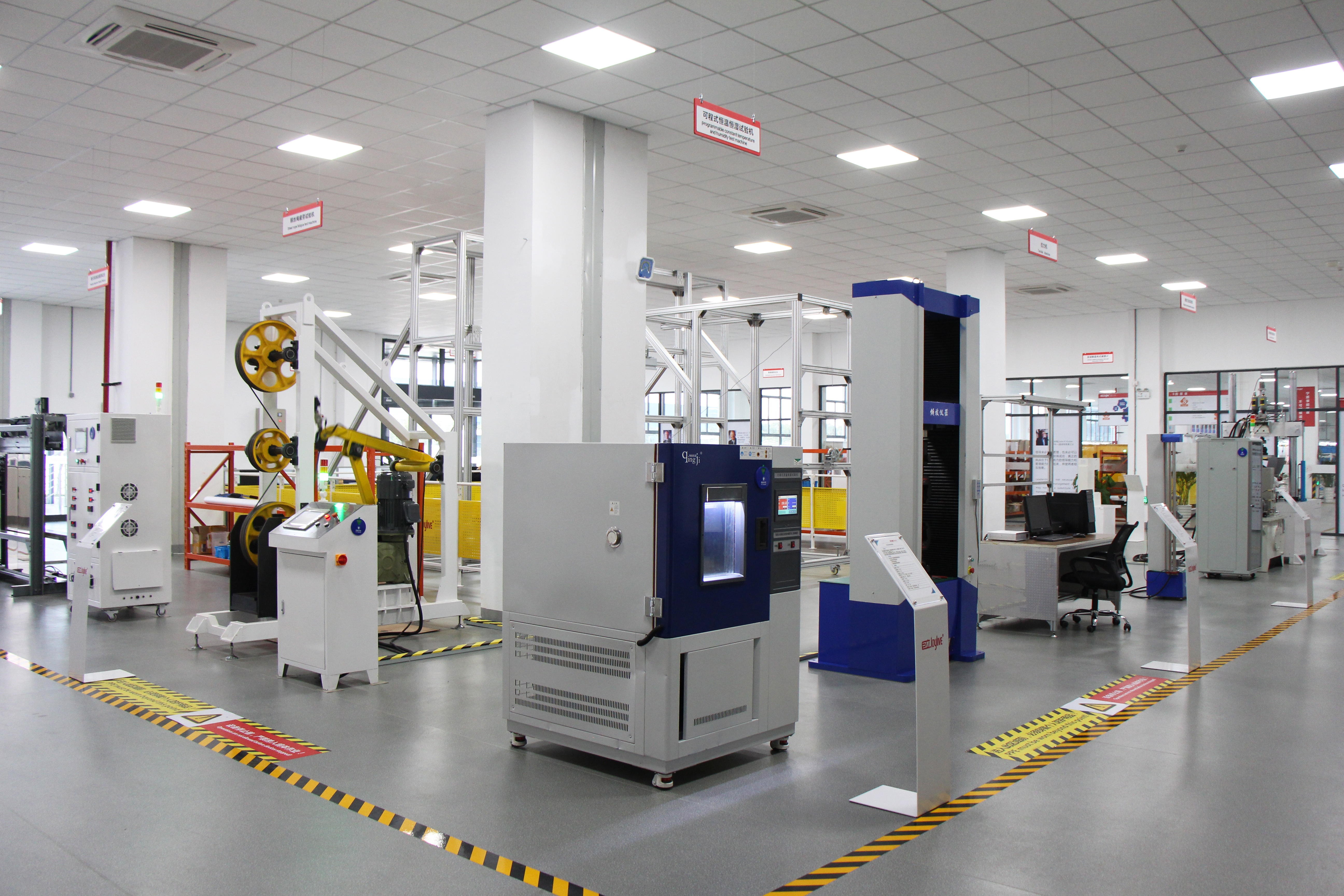
- Run the factory test. Joylive states 100% testing of units and defines acceptance criteria as a pre-shipment test. The buyer's right to witness or review that test should be agreed before production starts, not after the unit is crated.
- Ship, install and commission. Production lead time is published as 7 to 45 days against a monthly capacity of 1,250 units. Shipping and installation follow the site readiness date, which is usually the real constraint on a construction programme.
- Plan maintenance and modernization from day one. With modernization growing at around 7% CAGR through 2030, the maintenance and upgrade path is now a normal part of the asset plan rather than an afterthought.
Published Configuration Ranges: What the Numbers Actually Say
The table below reproduces only the configuration values that Joylive publishes for its passenger elevator series. These are company-reported figures, not third-party benchmark results, and they should be confirmed against the certified technical file for the specific model and market.
| Series / configuration | Rated speed | Rated load | Travel height | Stated application |
|---|---|---|---|---|
| 3 Series passenger elevator | Up to 2.5 m/s | Up to 1,600 kg / up to 21 persons | Up to 125 m | Residences, business buildings and other building sites |
| 5 Series, machine-room configuration | 1.0–4.0 m/s | 630–3,000 kg | Up to 140 m | High-rise and high-visitor-flow buildings, hotels, malls, public sites |
| 5 Series, machine-roomless configuration | 1.0–3.0 m/s | 630–3,000 kg | Up to 140 m | High-rise and high-visitor-flow buildings, hotels, malls, public sites |
| S Series passenger elevator | Not published in the reviewed sources | Not published in the reviewed sources | Not published in the reviewed sources | Ordinary residential buildings, hotels, budget-limited projects |
Two conclusions follow for a first-time buyer. First, the machine-roomless choice can reduce the available speed ceiling within the same series, so the architectural decision has a performance consequence. Second, a series name alone does not define a product: the same series spans a wide load and speed band, and the delivered unit is defined by the technical schedule, not by the brochure cover.
What Smart Building Integration Actually Requires
Smart building language is often vague, so it helps to separate what can be verified from what is merely claimed. Joylive describes its passenger elevator portfolio as combining energy efficiency, advanced safety features and intelligent IoT technology, and lists more than 65 standard functions on its product page; the company's product range also includes IoT devices and smart building products as separate categories. Those statements describe the manufacturer's positioning and should be read that way.
On the energy side, there is a real methodology to demand. ISO 25745-2:2015 provides the calculation and classification methodology for lift energy performance, which means any declared energy class should reference a stated calculation basis and reference cycle. Joylive holds two separate energy-efficiency certificates covering its passenger elevator models GP30 and GPN30: certificate 10.16.2281 issued by EURO CERT against VDI 4707 Part 1, and certificate 10.16.2280 issued against ISO 25745-2:2015, both valid to 2029-09-29 and both scoped to a machine-room passenger lift at 1,000 kg and 1.75 m/s. A buyer evaluating an energy claim should ask which reference cycle applies to the actual configuration, because a certificate for one rated load and speed is not a certificate for every configuration.
On the safety and connectivity side, the practical test is documentation rather than vocabulary. Ask which standard the fire-service function is certified against, which model and configuration the certificate covers, and how the controller interfaces with the building management system. A connected elevator that cannot produce its conformity documents is not a smart building asset; it is an unresolved compliance item.

Purchasing Terms and Acceptance Criteria: A First-Buyer Primer
The commercial terms published by Joylive are simple enough to serve as a template for what a buyer should expect to see in writing. The minimum order quantity is 1 unit. Delivery terms are FOB or CIF. Payment terms are 30/70. Acceptance criteria are defined as a pre-shipment test, supported by 100% testing of units. Lead time is published as 7 to 45 days, against a monthly capacity of 1,250 units.
Around those headline terms, a first order should also pin down the following, because each one is a common source of dispute.
- Certificate scope, not certificate presence. For a EU-bound project, the relevant references include EU type-examination certificate 10.03.5199 for a machine-room passenger lift and 10.03.5200 for a machine-roomless passenger lift, both issued by EURO CERT against Directive 2014/33/EU, EN 81-20:2020 and EN 81-50:2020. The fire-service variants are covered by 10.03.5609 and 10.03.5610 against the same directive together with EN 81-72:2020 and EN 81-77:2022. Matching the certificate to the delivered configuration is the buyer's job.
- Management-system evidence. Joylive holds ISO 9001:2015 registration STQ10021-00 and ISO 14001:2015 registration STE10021-06 and SHE10021-06, issued by AFNOR Asia Ltd, plus GB/T 19001-2016 and GB/T 50430-2017 registration SHQ10021-05 covering design, manufacturing, sales, installation and maintenance of elevators.
- Customization list in writing. Speed, load, travel height, car size, car decoration and logo are all customizable; unconfirmed items default to whatever the factory considers standard.
- Acceptance test definition. Agree what is inspected, at which stage, by whom and against which document, and whether the buyer or a third party witnesses it.
- After-sales route. Joylive provides online and offline technical support through a 24/365 hotline; the response path and spare-parts arrangement should be written into the contract rather than assumed.
Frequently Asked Questions
What standards and certifications should a passenger elevator meet for EU and North American projects?
In the European Union, lifts placed on the market fall under Directive 2014/33/EU, with EN 81-20 and EN 81-50 as the harmonised standards normally cited for presumption of conformity. Firefighters lifts are addressed by EN 81-72, and vertical lifting platforms for persons with impaired mobility by EN 81-41. In the United States and Canada, ASME A17.1/CSA B44 is the joint safety code, adopted at state or provincial level. Buyers should request the certificate number, issuing body, product scope and destination market rather than accept a general statement that the product is certified.
Can a passenger elevator be customized for a specific building?
Yes. Joylive's OEM/ODM scope covers speed, load, travel height, car size, car decoration and logo, with a monthly capacity of 1,250 units and a minimum order quantity of 1 unit. Configuration ranges are published per series: the 3 Series states a maximum speed of 2.5 m/s, maximum travel height of 125 m and maximum load of 1,600 kg or up to 21 persons, while the 5 Series states 630–3,000 kg, travel up to 140 m, and 1.0–4.0 m/s in machine-room configuration or 1.0–3.0 m/s machine-roomless. These are company-published figures and should be confirmed against the project's certified technical schedule.
What drives the budget of a passenger elevator project?
No price is published in the sources reviewed here, and budget is driven by configuration rather than by a single headline rate. Rated speed, rated load, travel height, car size and decoration, machine-room versus machine-roomless layout, destination-market certification and site installation conditions all change the scope. Joylive quotes on a minimum order quantity of 1 unit with FOB or CIF delivery terms and 30/70 payment terms, so a meaningful comparison requires every bidder to price the same specification schedule.
Can a buyer order a single unit before committing to a full project order?
Yes. Joylive states a minimum order quantity of 1 unit, which allows a single elevator to be ordered for a pilot installation or a small residential project, and every unit is subject to 100% testing. Acceptance criteria are defined as a pre-shipment test, so the buyer's inspection right should be written into the order before production begins.
What is the lead time for a passenger elevator order?
Joylive publishes a lead time of 7 to 45 days against a monthly capacity of 1,250 units, with delivery terms of FOB or CIF. Lead time should be read together with the pre-shipment test, the shipping schedule and the site readiness date, because an elevator cannot be installed until the shaft, pit and power supply are ready. Buyers preparing a first project can review current specifications at joylivelift.com or request a quotation and the current catalogue through the contacts below.
Conclusion: Learn the Vocabulary Before You Learn the Price
Passenger elevators are a mature category with a stable vocabulary, and almost every avoidable procurement problem comes from a mismatch inside that vocabulary: a home lift quoted against a passenger elevator specification, a certificate accepted for the wrong product scope, an acceptance test that was never defined, or a configuration left to the factory default. The concepts in this guide are deliberately basic because they are the ones that get skipped.
Once the product category, the standard family, the configuration range and the acceptance criteria are fixed in writing, the commercial negotiation becomes ordinary. Before that point, no discount compensates for a specification that cannot be built, certified or accepted.
Next Step: Sample, Quotation and Catalogue
Joylive Elevator Co., Ltd. (stock short name: Joylive, stock code: 833481) is a manufacturer of passenger elevators, freight elevators, home lifts, hospital elevators, panoramic elevators, fire elevators, small passenger elevators, escalators and elevator modernization solutions, exporting to more than 55% of its output across Europe, America, Oceania, Africa, Central Asia, Southeast Asia and the Middle East.
Address: No. 322, Maoxu Rd., Bacheng, Kunshan, Suzhou City, Jiangsu Province, China
Email: [email protected]
Tel: +86 178-0524-3526
WhatsApp: +86 178-0524-3526
Website: https://joylivelift.com
Catalogue: Download the Joylive product brochure (PDF)
Share your building type, number of floors, expected passenger flow and destination market, and the team can return a configuration schedule, the certificates applicable to that configuration, and a quotation on MOQ 1 unit with FOB or CIF terms.
Have Questions or Need More Details?
Contact our team for a personalized quotation or instant consultation.
Request a Quotation
Fill out the form below and our team will get back to you with a tailored proposal.
WhatsApp Direct Chat
Prefer to chat in real-time? Message us on WhatsApp for instant assistance & quick answers.
- Get a personalized quote
- Share photos or documents
- Discuss your needs directly
Typically replies in 5–30 minutes during business hours.