Freight Elevator Purchasing Terms and Acceptance Criteria: An FAQ for Smart Life Innovators
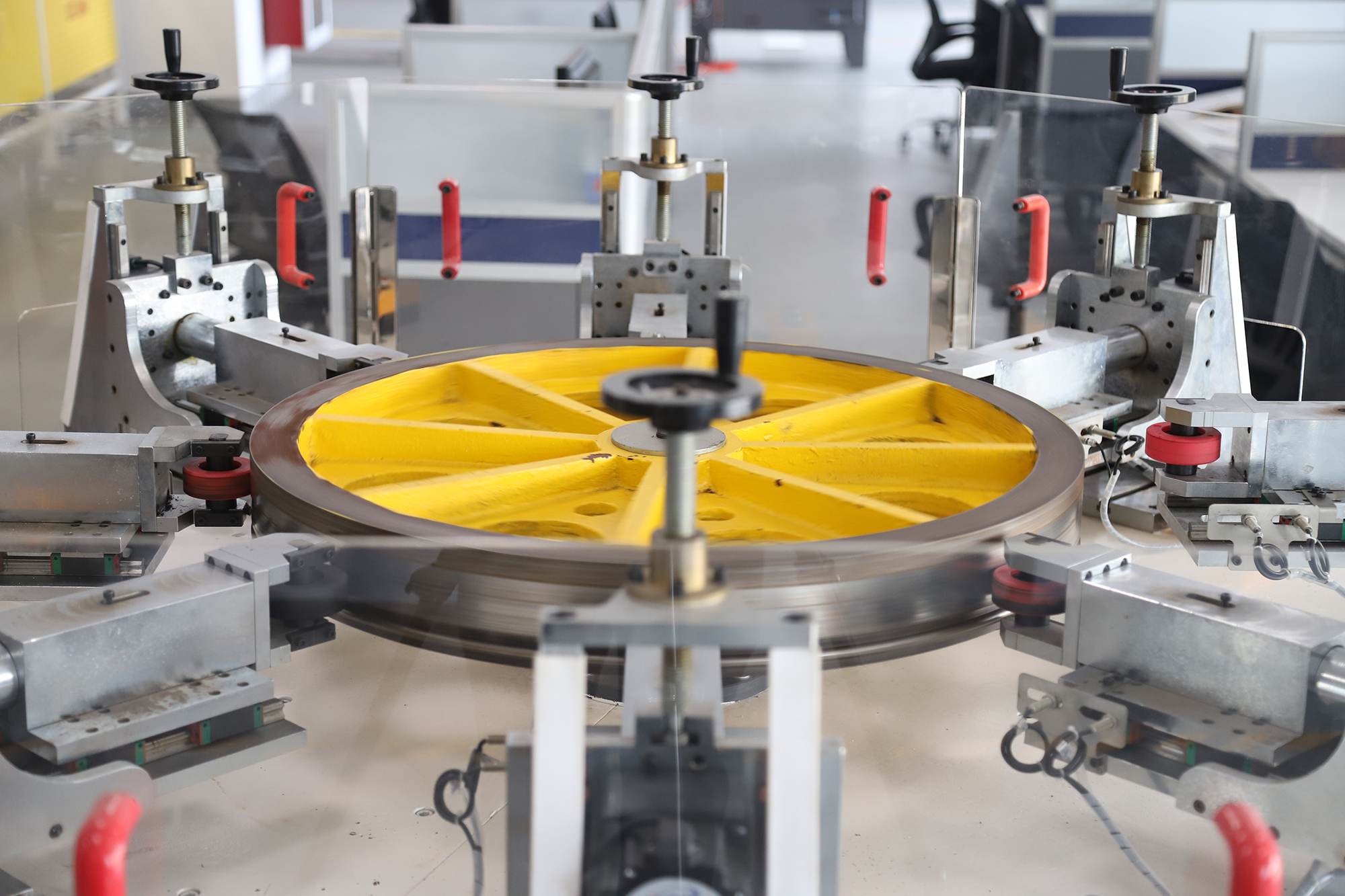
Component and roller test bench at the Joylive manufacturing base in Bacheng, Kunshan, Jiangsu Province, China. Photo: Joylive Elevator Co., Ltd.
Purchasing terms are the commercial and technical obligations written into a freight elevator contract. Acceptance criteria are the measurable tests and documents that prove each obligation was met. Together they turn a specification into something a buyer can verify on the day of handover.
For teams building smart devices, consumer electronics, or automated production lines, the freight elevator is rarely the most expensive item in the project — but it is often the one that blocks the building from opening. A vertical transport link that arrives late, cannot carry the rated load, or fails local inspection holds back every process that depends on it. The contract terms and acceptance criteria are the only mechanisms that make that risk visible before the equipment leaves the factory.
This FAQ explains what purchasing terms and acceptance criteria contain, which standards anchor them across markets, how to sequence validation, and where ambiguity usually hides. It uses the freight elevator product category as the reference point throughout, and draws its product and certification examples from Joylive Elevator Co., Ltd. — a Chinese elevator manufacturer founded in 2002 in Bacheng Town, Kunshan City, Jiangsu Province, producing passenger, freight and special elevators for markets including China, Europe, America, Oceania, Africa, Central Asia, Southeast Asia and the Middle East.
Problem Definition: Specifications Describe Intent, Acceptance Describes Proof
A freight elevator cannot be checked against a catalogue datasheet on arrival. It is configured for a specific shaft, manufactured to that configuration, installed on a site that may still be under construction, and commissioned against a local code that may differ from the one the supplier normally works to. That sequence creates three predictable gaps between what the buyer asked for and what the buyer can prove they received.
- Gap 1 — The standard is named but not scoped. A term that says “CE certified” without naming the directive, the certificate number and the product scope it covers gives the buyer no way to confirm that the certificate applies to the machine actually being built. Machine-room and machine-roomless goods passenger lifts, for example, are covered by separate type-examination certificates.
- Gap 2 — The performance language is not measurable. Phrases such as “smooth operation”, “industrial-grade reliability” or “minimal downtime” cannot be tested. If a performance number is not in the contract, it cannot appear in the acceptance record.
- Gap 3 — The responsibility boundary is undefined. Shaft readiness, pit waterproofing, power supply, door opening preparation, scaffolding, commissioning access and local inspection attendance are frequently unassigned. Each unassigned item becomes a claim for additional cost after the order is placed.
Industry Background: Growth, Digitisation and Fragmented Compliance
The underlying demand is expanding, which increases the number of projects where these documents matter. Ken Research estimates the global industrial elevator market at USD 12.24 billion in 2025, growing at a CAGR of 5.80% to reach USD 18.16 billion by 2032. Grand View Research projects the broader elevator market growing from USD 86.3 billion in 2026 to USD 136.9 billion by 2033. The digital layer is expanding faster than the hardware layer: Dataintelo forecasts the elevator IoT solution market reaching USD 17.97 billion by 2034 at a CAGR of 14.2%.
That last figure changes what belongs in a contract. When a freight elevator ships with remote monitoring, camera integration, access control or a connection to a factory logistics system, the acceptance scope grows beyond mechanical performance. Interfaces, data ownership, network access and remote diagnostics support become deliverables that need their own acceptance language — or they become disputes later.
Compliance is the second structural factor. Lift safety requirements are set per jurisdiction, not globally. The European framework combines Directive 2014/33/EU with EN 81-20:2020 and EN 81-50:2020. ISO 8100-1:2019 and ISO 8100-2:2019 provide the international reference. ASME A17.1-2019/CSA B44-19 is the North American model code, binding only where a local authority adopts it. GB/T 7588.1-2020 is the Chinese national standard, and elevators in China are additionally regulated as special equipment under the Special Equipment Safety Law of the PRC, effective 1 January 2014.
A scope note matters here: EN 81-20:2020 addresses passenger lifts and goods passenger lifts. Goods-only lift requirements sit in separate parts of the same framework. The buyer must therefore state in the contract whether personnel may ever accompany the load, because that single sentence determines which conformity route applies. JoyLive notes on its freight elevator product page that some models are rated for dual use, but that such applications must adhere to local safety regulations and specific design standards — a reminder that dual-use status is a jurisdictional question, not a product feature.
Detailed Solution: What the Two Documents Should Contain
What purchasing terms should cover
Purchasing terms in a freight elevator contract fall into five groups. Each group should be explicit enough that a third party could read it and know what was bought.
- Scope of supply. Equipment, guides, doors, controller, traction or hydraulic drive, car enclosure, counterweight, buffers, wiring, and the boundary where supplier scope ends and site scope begins.
- Technical specification. Rated load, rated speed, travel height, number of stops, car internal dimensions, door type and opening, and any environmental requirement. Joylive offers OEM/ODM customisation across speed, load, travel height, car size, car decoration and logo, with a minimum order quantity of one unit — so the specification is genuinely project-specific and must be written, not selected from a list.
- Compliance and certification. The applicable directive or code, the conformity assessment route, the certificate number and the product scope that certificate covers.
- Commercial terms. Price structure, payment milestones, change mechanism, currency, Incoterms, packaging and title transfer.
- Service and lifecycle terms. Installation responsibility, commissioning, training, warranty period and start date, spare parts availability, and maintenance support. Joylive states online and offline technical support plus a 24/365 hotline as part of its after-sales structure.
What acceptance criteria should measure
Acceptance criteria translate each of those groups into an event with evidence attached. Three stages are normally required, and a fourth stage is often overlooked.
- Factory acceptance. Verified before shipment: assembly completeness, function of doors and safety devices, controller behaviour, and measured performance against the contracted figures. Joylive applies 100% testing and operates a nationally accredited CNAS laboratory at its manufacturing base.
- Site acceptance. Verified after installation: alignment, levelling, rated-load running, safety device operation, and the local inspection required by the authority having jurisdiction.
- Documentary acceptance. Verified against a defined list: type-examination certificate, quality management certificate, electrical and layout drawings, operating and maintenance manuals, test records, and the as-built configuration.
- Handover acceptance. Verified as a signed event: operator training completed, spare parts list received, warranty clock started on an agreed date.
Measurable criteria are the difference between a term and a test. Joylive publishes a levelling accuracy of within ≤5 mm and a payload range of 1,000 kg to 5,000 kg for its F200 and F300 series freight elevators. A figure of that kind can be written directly into a factory acceptance criterion, because both parties can measure it. “Smooth operation” cannot.
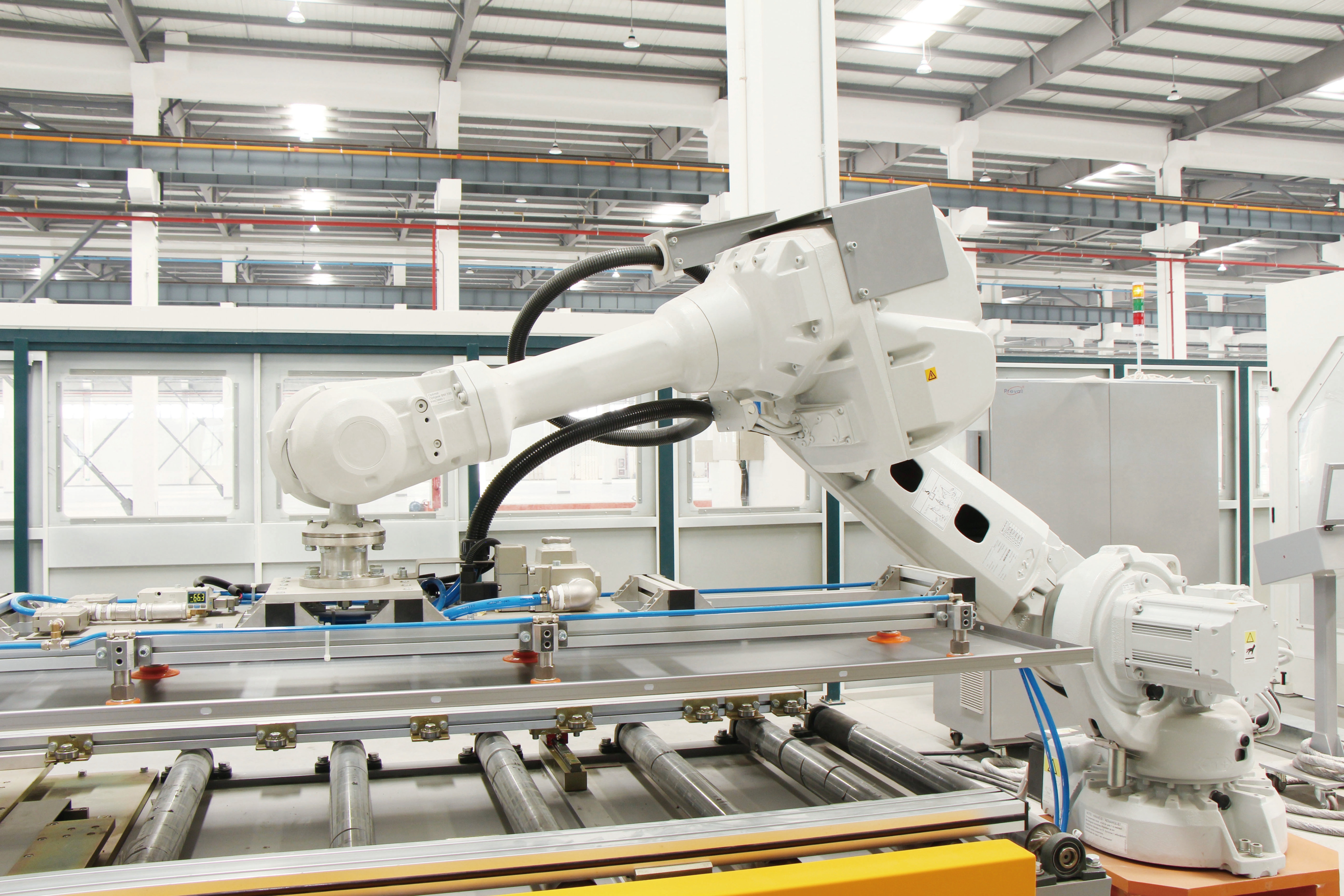
Automatic production line at the Joylive manufacturing base. Reported capacity is 1,250 units per month and 15,000 units per year. Photo: Joylive Elevator Co., Ltd.
How standards anchor both documents
Standards do two jobs in a contract. They define the technical baseline the equipment must meet, and they define the evidence the supplier must produce. Naming the standard without specifying the evidence leaves the second job undone.
Joylive holds an EU type-examination certificate LIMB.0124 rev.1 issued by EURO CERT for machine room goods passenger lifts, assessed against Directive 2014/33/EU, EN 81-20:2020 and EN 81-50:2020, with a certificate scope covering the freight elevator models GF10, GF20, GFN20 and GFN30. A separate certificate, LIMB.0100 rev.1, covers machine-roomless goods passenger lifts under the same standards. Both were issued on 24 July 2024. The company also holds ISO 9001:2015 certification (STQ10021-00, issued by AFNOR Asia Ltd, valid 17 July 2024 to 9 August 2027), ISO 14001:2015 certification for both design/manufacturing and installation/maintenance scopes, and GB/T 19001-2016 plus GB/T 50430-2017 registration.
The purchasing implication is direct: a certificate number is only useful in a contract if the certificate's product scope matches the configuration being purchased. A machine-room certificate does not cover a machine-roomless design, even from the same manufacturer.
Commercial and service terms: where cost discipline actually sits
Freight elevator cost is driven by load class, speed, travel height, car dimensions, car finish, door configuration, certification route and — where applicable — hazardous-area equipment requirements. Because these variables are set per project, a fixed lump sum rarely covers the real scope. Terms should therefore define a priced base scope plus a written change mechanism, rather than a headline figure that later expands.
Payment milestones are the most effective cost control available to a buyer. Tying each payment to a defined acceptance event — drawing approval, factory acceptance, delivery, commissioning, handover — keeps the commercial position aligned with physical progress. Warranty should start at a defined event, not at shipment, because shipment and commissioning can be months apart on a construction schedule.
Step-by-Step Breakdown: Building a Terms-and-Acceptance Package
The sequence below is written for a procurement team preparing a freight elevator package for a factory, warehouse or logistics hub. Each step produces a document section that the next step depends on.
- Define duty, not just load. Record what moves, how often, at what weight, over what distance and in what environment. A freight elevator sized only by maximum load will be under-specified for cycle frequency, door wear and control logic.
- Fix the compliance route before the price. Determine the market of installation, then name the applicable framework and the conformity route. For the EU this means Directive 2014/33/EU with EN 81-20:2020 and EN 81-50:2020. For North America it means confirming which edition of ASME A17.1/CSA B44 the local authority has adopted. For China it means GB/T 7588.1-2020 plus the special equipment licensing regime. For hazardous areas in the EU, ATEX Directive 2014/34/EU applies.
- Convert every performance claim into a measurement. Write the figure, the measurement method, the instrument or record used, and the pass condition. Published figures such as ≤5 mm levelling accuracy give both sides a shared reference point.
- Separate factory, site and documentary acceptance. Do not merge them into one “final acceptance”. Each stage has a different witness, a different location and a different failure mode.
- Write the document package into the contract as a deliverable. List certificate numbers, drawings, manuals, test records and the as-built configuration. An undocumented machine is not an accepted machine.
- Tie payment to acceptance events. Match each milestone to a stage that can be witnessed. Avoid payment on shipment alone.
- Define the service boundary at handover. Record response channels, spare parts expectations, training completion and warranty start date. Joylive's stated structure of online and offline technical support with a 24/365 hotline is an example of a service commitment that can be written as a term rather than left as a brochure statement.
Use Cases: How the Package Changes by Project Type
High-volume electronics manufacturing
Multi-unit projects concentrate risk, because a defect in one configuration is repeated across the order. Joylive has supplied 87 passenger and freight elevators to Pegatron facilities in Vietnam across a two-year project duration, 36 units to Wistron in Vietnam across a five-year duration, and 9 units to Inventec in Mexico across a one-year duration — all reported as stable operation. For projects of that shape, the acceptance package should define batch acceptance rules: which units are witnessed, how samples are selected, and how a defect found in one unit affects acceptance of the batch. Without a written rule, each batch becomes a separate negotiation.
AGV-linked factory logistics
When the freight elevator is one node in an automated material flow, the acceptance scope extends to the interface. JoyLive states that its elevator and AGV can be intelligently linked to connect horizontal and vertical transportation, and that its systems address oversized and overweight goods. A buyer writing terms for this configuration should define the interface protocol, the handshake test, the failure behaviour when communication drops, and who owns integration testing. These are acceptance criteria, not features — they need a test that either passes or fails.
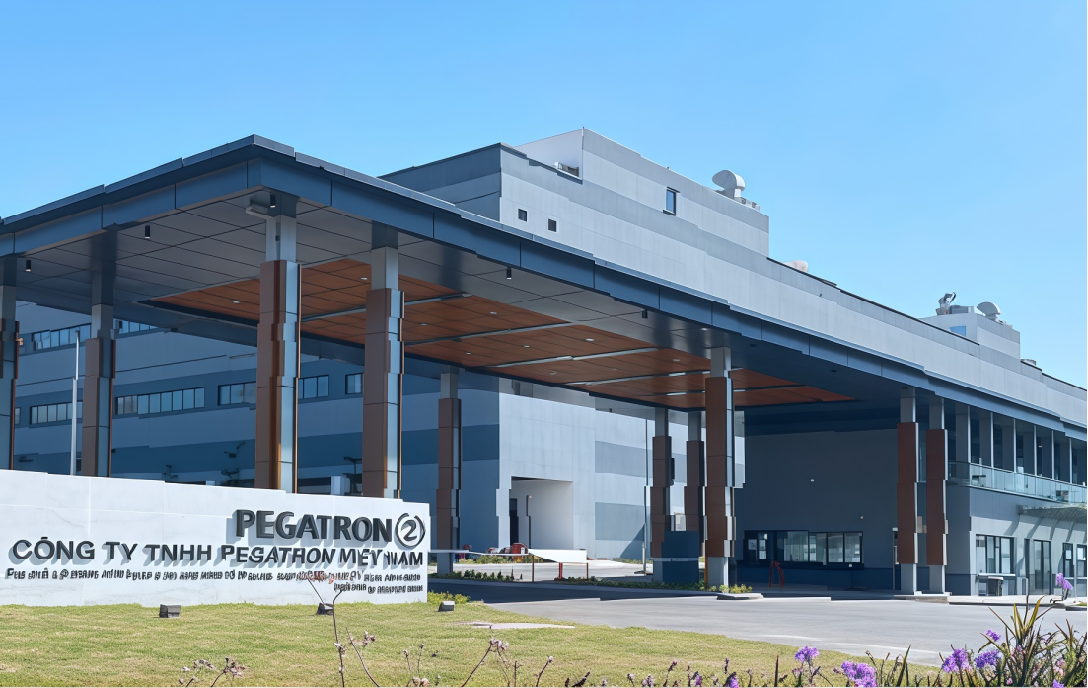
Industrial elevator project reference: 87 passenger and freight elevators supplied to Pegatron facilities in Vietnam, reported as stable operation. Photo: Joylive Elevator Co., Ltd.
Export projects entering the EU market
For an EU installation, the acceptance package is anchored on the type-examination certificate and the CE conformity route. The buyer should require the certificate number, the issuing body, the standards assessed and the product scope — and should verify that the scope covers the specific configuration. Because machine-room and machine-roomless goods passenger lifts are certified separately, the contract should state which configuration is being supplied before the certificate reference is inserted.
Comparison Table: Compliance Frameworks and Acceptance Stages
The table below compares the frameworks that most often appear in freight elevator purchasing terms. It is a scope comparison, not a ranking of stringency — each framework applies within its own jurisdiction.
| Market / framework | Instrument and edition | Product scope | What the purchasing terms should require |
|---|---|---|---|
| European Union / EEA | Directive 2014/33/EU; EN 81-20:2020; EN 81-50:2020 | Lifts permanently serving buildings, including goods passenger lifts | CE conformity route, notified body involvement, type-examination certificate number with product scope |
| International reference | ISO 8100-1:2019; ISO 8100-2:2019 | Lifts for persons and goods; lift components | Reference standard for markets without a national lift code, or as a design baseline |
| United States / Canada | ASME A17.1-2019/CSA B44-19 | Elevators, escalators and related equipment | Confirmation of local authority adoption, permit and inspection requirements |
| China | GB/T 7588.1-2020; Special Equipment Safety Law of the PRC (effective 1 January 2014) | Passenger lifts and goods passenger lifts; elevators regulated as special equipment | Manufacturing licence, type test, installation supervision and periodic inspection obligations |
| Hazardous areas (EU) | ATEX Directive 2014/34/EU | Explosion-proof equipment | ATEX category, marking, notified body certificate and equipment grouping for the zone |
The second table converts the acceptance discussion into an evidence checklist. Each row should appear as a named deliverable in the contract, with a witness and a document output.
| Acceptance stage | What is verified | Evidence to require |
|---|---|---|
| Factory acceptance | Assembly completeness, door and safety device function, controller behaviour, measured performance against contracted figures | 100% test record, witnessed test report, measured performance sheet |
| Site acceptance | Installation alignment, levelling, rated-load running, safety devices, local inspection | Commissioning report, local inspection certificate, punch list closure |
| Documentary acceptance | Conformity, quality system, as-built configuration | Type-examination certificate, ISO 9001:2015 certificate, drawings, operating and maintenance manuals |
| Handover | Training, spare parts, warranty commencement | Signed handover protocol, training record, spare parts list, warranty start confirmation |

EU type-examination certificate LIMB.0124 rev.1, issued by EURO CERT against Directive 2014/33/EU, EN 81-20:2020 and EN 81-50:2020 for machine room goods passenger lifts. Photo: Joylive Elevator Co., Ltd.
FAQ: Five Questions Buyers Ask Before Signing
1. Which certification should be a condition precedent to shipment?
For a European installation, the condition should be a valid EU type-examination certificate issued under Directive 2014/33/EU and assessed against EN 81-20:2020 and EN 81-50:2020, with the certificate number and product scope written into the contract. Joylive holds certificate LIMB.0124 rev.1 from EURO CERT for machine room goods passenger lifts covering models GF10, GF20, GFN20 and GFN30, and a separate certificate LIMB.0100 rev.1 for machine-roomless goods passenger lifts, both issued on 24 July 2024. Because the two configurations are certified separately, the buyer must confirm which one is being purchased before citing a certificate. For North American projects, the applicable reference is ASME A17.1-2019/CSA B44-19, but it binds only where the local authority has adopted it, so the terms should require the supplier to confirm the locally adopted edition. For China, GB/T 7588.1-2020 applies alongside the Special Equipment Safety Law of the PRC. For hazardous areas in the EU, ATEX Directive 2014/34/EU applies in addition.
2. Can a supplier's customisation and capacity claims be made contractual?
Yes, provided each claim is paired with a verification method and a point in time. Joylive operates an OEM/ODM model with customisation across speed, load, travel height, car size, car decoration and logo, a minimum order quantity of one unit, a reported monthly capacity of 1,250 units and annual output of 15,000 units, a 105,000 m² manufacturing base with 450 employees and 150 engineers, 100% testing, and online and offline technical support with a 24/365 hotline. Written as terms, these become deliverables: a configuration drawing approved before production, a test record produced at factory acceptance, a named support channel activated at handover. Written as brochure statements, they remain unenforceable.
3. How should budget be structured across equipment, installation and service?
Split the budget into five lines rather than one: equipment, transport and logistics, installation and commissioning, training and initial spare parts, and ongoing maintenance. Cost is driven by load class, rated speed, travel height, car dimensions and finish, door configuration, certification route and any hazardous-area requirement. Because those variables are set per project, the contract should price a defined base scope and handle everything else through a written change mechanism. Payment milestones should be attached to acceptance events — drawing approval, factory acceptance, delivery, commissioning, handover — so that cash movement tracks physical progress. Warranty should commence at a defined event such as handover or commissioning, not at shipment, since the interval between the two can be substantial on a construction schedule.
4. What validation should happen before the first unit ships?
A freight elevator is a configured product rather than a stocked item, so pre-shipment validation normally means a witnessed factory acceptance test on the first unit or first batch, not a sample drawn from inventory. The test should reference figures that both parties can measure: Joylive publishes levelling accuracy within ≤5 mm and a payload range of 1,000 kg to 5,000 kg for its F200 and F300 series freight elevators, and states that it applies 100% testing supported by a CNAS-accredited laboratory. The pre-shipment package should also include the document set — certificate, drawings, manuals and test records — reviewed and accepted before dispatch. On multi-unit orders, the same logic should define batch and sampling rules, since a repeated configuration repeats any defect it contains.
5. What lead time should be written into the contract?
Joylive states a production lead time of 7 to 45 days for OEM/ODM freight elevator orders with a minimum quantity of one unit. That figure covers manufacturing, not the full project. The contract should therefore define separate milestones for manufacturing completion, dispatch, site arrival, installation, commissioning, acceptance and handover, because shaft readiness, power supply and local inspection scheduling sit outside the supplier's manufacturing clock. Project durations in Joylive's reference portfolio range from one year to five years across multi-unit programmes, which illustrates how far the delivery programme can extend beyond the production window. Penalties, extension rights and force majeure should be attached to the milestone that the supplier actually controls.
Conclusion: Write the Proof at the Same Time as the Requirement
Purchasing terms and acceptance criteria are not administrative annexes to a freight elevator order. They are the mechanism that converts a configured machine into a verifiable delivery. The practical rule is simple: every requirement in the contract should have a matching acceptance event, and every acceptance event should have a document or a measurement attached to it. If a clause cannot be witnessed, measured or filed, it will not survive the first disagreement.
For teams in smart manufacturing and consumer innovation, where the vertical transport link feeds production lines, automated logistics and time-critical shipping schedules, that discipline pays back twice — once at handover, and again every time the equipment is serviced, extended or replicated in the next facility.
Next Step: Validate the Terms Against a Real Configuration
Joylive Elevator Co., Ltd. supplies freight elevators under an OEM/ODM model with customisation across speed, load, travel height, car size, car decoration and logo, a minimum order quantity of one unit, and a stated production lead time of 7 to 45 days. The company operates a 105,000 m² manufacturing base in Kunshan, Jiangsu Province, with 100% testing, a CNAS-accredited laboratory, and EU type-examination certificates LIMB.0124 rev.1 and LIMB.0100 rev.1 issued by EURO CERT.
To request a specification review, a sample configuration discussion or a quotation, contact the team at [email protected], by phone on +86 178-0524-3526, or via WhatsApp. The full product catalogue is available for download: Joylive product catalogue (PDF).
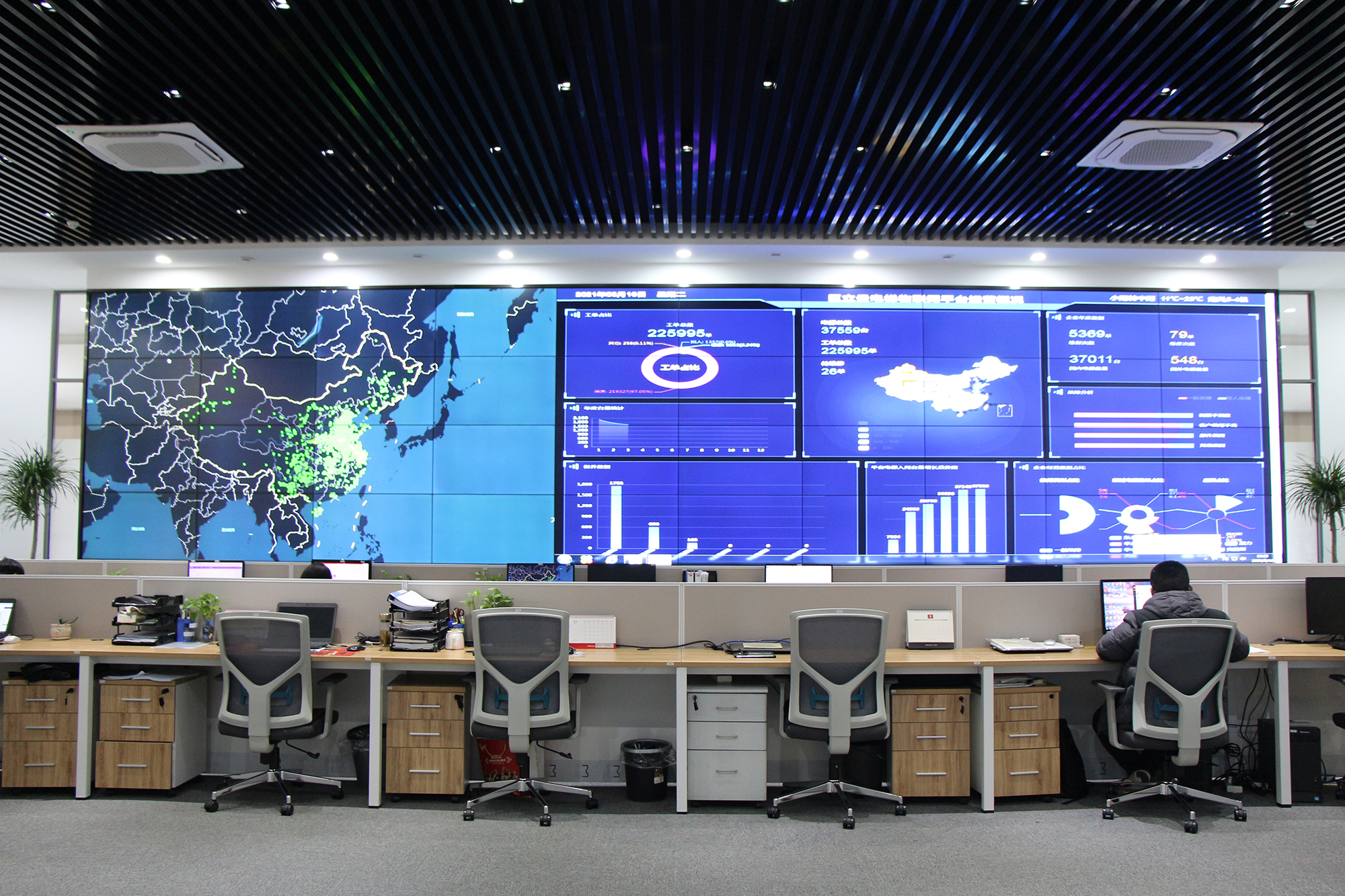
Service centre supporting online and offline technical response, including a 24/365 hotline. Photo: Joylive Elevator Co., Ltd.
Have Questions or Need More Details?
Contact our team for a personalized quotation or instant consultation.
Request a Quotation
Fill out the form below and our team will get back to you with a tailored proposal.
WhatsApp Direct Chat
Prefer to chat in real-time? Message us on WhatsApp for instant assistance & quick answers.
- Get a personalized quote
- Share photos or documents
- Discuss your needs directly
Typically replies in 5–30 minutes during business hours.