Recommended Small Machine Room Elevator Configurations by Building Type: A Shortlist Guide
Recommended Small Machine Room Elevator Configurations by Building Type: A Shortlist Guide
Small machine room elevator configurations are usually narrowed down by building type, not by traction technology alone. A low-rise apartment block, a mid-rise office building and a hotel can all use a gearless traction platform with a reduced machine room, yet each places different demands on shaft space, traffic handling, finish quality and service access. This guide shortlists four configuration directions — low-rise residential, commercial office, hotel and hospitality, and constrained retrofit — and explains the verified parameters, documentation and selection considerations behind each one.
Two points frame everything below. First, the shortlist is a set of selection considerations, not a performance guarantee for any specific building; the final specification still has to be confirmed against a site survey and a traffic study. Second, every parameter and certificate quoted here comes from documented company and project records, and the certification scope is stated exactly as issued, because scope mismatches are one of the most common causes of rework during elevator procurement.
What Counts as a Small Machine Room Elevator Configuration
A small machine room elevator is a traction elevator that keeps a dedicated machine room at the top of the shaft but reduces that room's footprint compared with a traditional full-size machine room layout. It sits between two familiar approaches: the classic large machine room, and the machine-room-less design in which the drive is integrated into the shaft itself. The practical appeal of the small machine room format is that it preserves the serviceability of a dedicated drive room while using far less of the building's top floor.
Configuration is therefore not a single product. A small machine room package is defined by the combination of drive, control and interface elements that a building actually needs:
- Drive: a gearless traction machine with a permanent magnet motor is the usual starting point for compact machine room layouts, because a smaller, lighter drive reduces both room size and structural load.
- Control: a variable frequency drive (VFD) governs acceleration, deceleration and levelling; regenerative drive options are commonly considered where start-stop frequency is high and energy recovery has value.
- Machine room equipment: a compact control cabinet allows the remaining machine room space to stay small, but the room must still meet access, lighting and ventilation requirements.
- Interface: car size, car decoration, signalisation and branding are project-level choices, not platform-level ones.
That is why two buildings of identical height can end up with materially different small machine room specifications: the deciding variables are space, traffic and service needs, not floor count alone.
The Problem: The Same Label Hides Different Requirements
Buyers searching for a small machine room elevator often compare quotations that look similar on paper and still cannot be compared properly, because the underlying assumptions differ. Three requirements are frequently mixed together:
- Spatial requirement. How much machine room footprint the building can give up, and what headroom and shaft geometry already exist — this matters most in retrofit and low-rise projects.
- Traffic requirement. How many trips per hour the building generates at peak, which determines speed, rated load and whether group control is needed.
- Service requirement. How the installation is maintained over its life, including technical support availability and the documentation the owner must retain.
A configuration optimised for the first requirement can be a poor fit for the second. Conversely, overspecifying speed and load to cover every possibility raises cost without improving service for the building's actual usage pattern. The shortlist below resolves this by matching configuration direction to building type first, then validating the detail.
Industry Background: A Category Under Active Evaluation
The commercial context supports treating this as an evaluation-stage decision rather than a routine purchase. According to Grand View Research, the global elevators market was valued at USD 82.4 billion in 2025, and the same research projects the market to reach USD 86.3 billion in 2026 and USD 136.9 billion by 2033, a compound annual growth rate of 6.8%. Within that market, traction elevators — the technology family that includes machine room and machine-room-less configurations — held the largest revenue share at 55.1% in 2025, and Asia Pacific accounted for a 41.7% regional revenue share in the same year.
Two cautions are worth stating plainly. First, market valuations differ by methodology and scope: broader “elevator and escalator” valuations published by other research houses are considerably higher than the elevator-only figure above, so figures should not be quoted interchangeably. Second, published datasets do not currently separate small machine room volume from machine-room-less volume, which means configuration decisions in this category are still driven by project engineering rather than by a visible market benchmark.
Cost pressure is also a live variable. Mordor Intelligence reports that rare-earth magnet prices for permanent magnet motors increased by more than 20% in 2025 — a direct input into gearless machine and permanent magnet motor pricing, and a reason to confirm drive specification and commercial terms early rather than late in a project.
Shortlist 1 — Low-Rise Residential and Apartment Blocks
Small machine room elevator for residential buildingsLow-riseEnergy efficiency
What the building demands. Residential blocks typically run frequent short trips with long idle periods, and the owner carries energy and maintenance cost for decades. The machine room should consume as little floor area as possible, and the drive should be efficient at part load.
Recommended configuration direction. A gearless traction machine with a permanent magnet motor and a variable frequency drive, specified inside the machine-room passenger lift platform envelope. Joylive's passenger elevator platform (models GP30 and GPN30) is documented with a speed range of 1.0–8.0 m/s, a rated load range of 630–3000 kg, a maximum travel height of 350 m and SS304 as the stated material, and it is listed as applicable to residential buildings among other building types.
Why energy-efficiency documentation belongs in this shortlist. For residential buyers, the strongest verifiable differentiator is not a marketing claim but a certificate. Joylive holds an energy efficiency certificate for a machine room passenger lift against VDI 4707 part 1, certificate number 10.16.2281, issued by EURO CERT, with the certification record referencing a 1000 kg / 1.75 m/s machine room passenger lift configuration and relating to the GP30 and GPN30 passenger elevator models. The certificate was issued on 30 September 2024 and is valid until 29 September 2029.
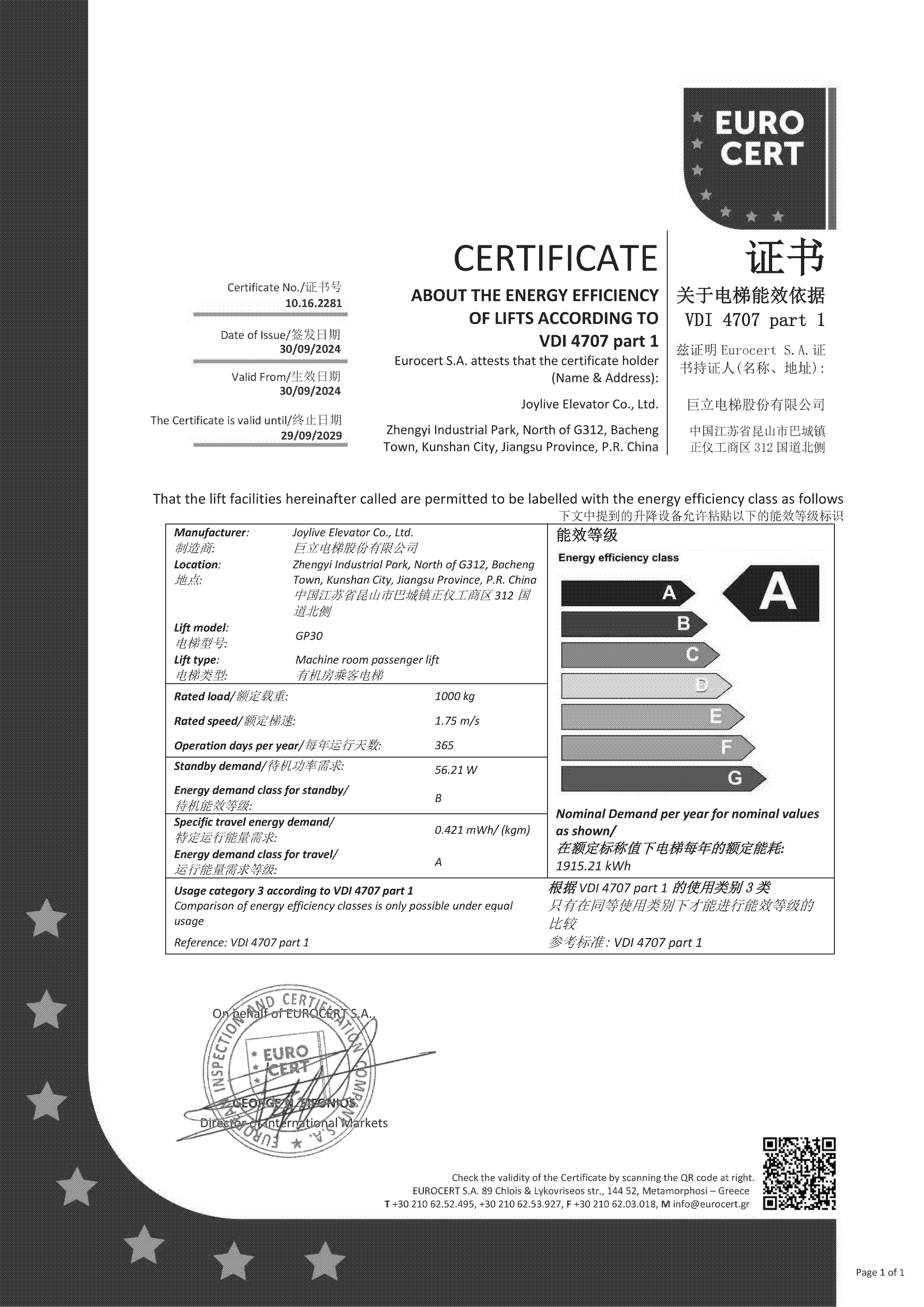
Limit to respect. A certificate covers the configuration it was issued for. If a residential project specifies a speed or load combination outside the certified reference point, the buyer should ask how energy performance is documented for that specific configuration rather than assuming the same classification carries over.
Shortlist 2 — Offices and Mixed-Use Commercial Buildings
Small machine room elevator for commercial buildingsTraffic handlingCustom car size
What the building demands. Offices concentrate demand into short morning and evening peaks, so speed, rated load and dispatching matter more than in residential use. Car size often has to be coordinated with a tight core, and lobby finishes are part of the tenant experience.
Recommended configuration direction. A higher-specification point inside the same passenger elevator envelope, combined with a compact control cabinet so the machine room stays small, and with car size treated as a project-level custom parameter. Joylive's documented customization scope covers speed, load, travel height, car size, car decoration and logo, which means the commercial configuration is defined at engineering stage rather than selected from a fixed list.
Verified project evidence. SAT CITY, a commercial landmark complex in Kazakhstan, used 208 Joylive elevators with customized car decorations and customer logos, with a reported duration of five years and stable operation. That project does not by itself certify a small machine room layout, but it does evidence the ability to deliver a large commercial package with coordinated finish and branding work, which is the part commercial buyers usually find hardest to resource.
Shortlist 3 — Hotels and Hospitality Buildings
Small machine room elevator for hotelsGuest experienceService continuity
What the building demands. Hotels combine guest-facing passenger traffic with back-of-house service traffic. Ride quality, quietness and finish quality affect guest perception directly, while the service route often needs a separate, higher-capacity solution.
Recommended configuration direction. Use a passenger configuration with customized car decoration and logo integration for guest areas, and evaluate a separate freight configuration for back-of-house movement. Joylive's freight elevator platform (models GF10, GF20, GFN20, GFN30) is documented with a speed range of 0.25–3.0 m/s, a load range of 1000–200000 kg and a maximum travel height of 150 m, with SS304 as the stated material; the passenger and freight platforms are both listed as applicable to hotel buildings.
Service consideration. Hotel operations rarely tolerate long downtime, so the after-sales arrangement belongs in the shortlist criteria from the start. Joylive documents online and offline technical support with a 24/365 hotline as part of its service scope.
Shortlist 4 — Constrained Retrofits, Low Headroom and Reduced Shaft Space
Low headroomReduced shaft spaceExisting buildings
What the building demands. In existing buildings, the machine room is often the binding constraint: the top floor may have limited space, restricted access or a ceiling height that cannot be altered economically. Reducing the machine room footprint is frequently the reason a small machine room configuration is considered at all.
Recommended configuration direction. Survey before specification, in this order: shaft geometry and access route, available machine room footprint, headroom above the shaft, and the load path available for the machine. Only after those are confirmed should speed and load be locked. A compact control cabinet and a gearless permanent magnet machine reduce the equipment demand on the room, but they do not remove the requirement for compliant access, lighting and workspace.
Compliance detail that is easy to miss. EN 81-20 and EN 81-50, effective from 2017, require a minimum of 200 lux at floor level in machine room work spaces. For a retrofit, this is a real design item: a small machine room still needs compliant illumination, and any design that treats the room as a technical cupboard creates an inspection problem later.
When this shortlist does not apply. Not every constrained building can accept a traction solution. Where travel height is genuinely short and the building is a private residence or villa, Joylive's home lift platform (model GH30) is documented with a speed range of 0.25–1.75 m/s, a load range of 200–1150 kg and a maximum travel height of 30 m. Matching the product family to the building is part of the evaluation, not an exception to it.
Verified Reference Platforms Behind These Configurations
The three Joylive platforms most relevant to a small machine room shortlist are documented as follows. Figures are the published platform ranges, not project-specific values.
| Platform | Models | Speed | Rated load | Max travel height | Stated material |
|---|---|---|---|---|---|
| Passenger elevator (machine room passenger lift) | GP30, GPN30 | 1.0–8.0 m/s | 630–3000 kg | 350 m | SS304 |
| Freight elevator | GF10, GF20, GFN20, GFN30 | 0.25–3.0 m/s | 1000–200000 kg | 150 m | SS304 |
| Home lift | GH30 | 0.25–1.75 m/s | 200–1150 kg | 30 m | SS304 |
Step-by-Step: From Shortlist to Locked Configuration
- Traffic and usage survey. Establish peak demand and the daily pattern. This decides whether the building sits at the lower or upper end of the passenger platform's speed and load envelope.
- Space survey. Measure shaft geometry, machine room footprint, headroom and access route. In retrofits, this step can change the shortlist before any equipment discussion begins.
- Define the certified reference point. Identify the speed and load combination the project will actually use, and check which energy efficiency documentation applies to that combination — for a 1000 kg / 1.75 m/s machine room passenger lift configuration, certificate 10.16.2281 against VDI 4707 part 1 applies.
- Fix the drive and control package. Confirm gearless traction with permanent magnet motor, the variable frequency drive, whether a regenerative option is justified, and the compact control cabinet arrangement.
- Confirm the customization scope in writing. Joylive's documented scope covers speed, load, travel height, car size, car decoration and logo; underspecified finishes are a common source of delay.
- Assemble the compliance file. Request the certificates relevant to the ordered configuration, together with quality and environmental system registrations, before production starts.
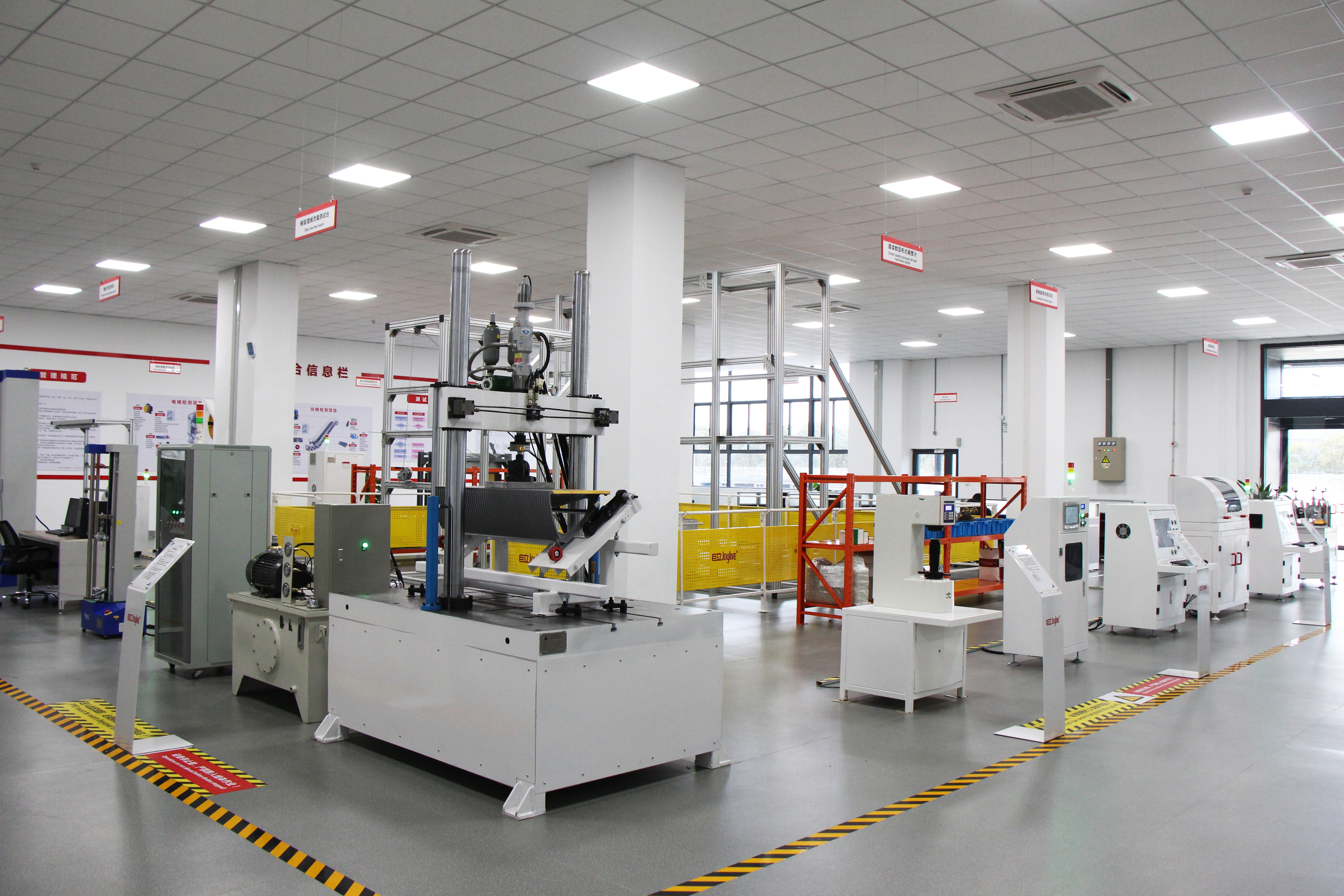
- Validate with test evidence. Confirm the testing regime and the documentation that will be handed over. Joylive documents 100% test as part of its quality control scope, and operates a nationally accredited CNAS laboratory.
- Plan delivery and installation. Production timing should be agreed against the documented lead time of 7–45 days and the documented monthly capacity of 1,250 units, with the annual output base of 15,000 units as context.
- Agree the service model. Online and offline technical support with a 24/365 hotline is part of the documented after-sales scope.
Use Cases: Multi-Unit Delivery Evidence
The following projects are documented references for Joylive's multi-unit delivery capability. They are passenger and freight elevator packages rather than small machine room certifications, and should be read as evidence of delivery and operational record, not as configuration certificates.
| Project | Project type and country | Units supplied | Duration | Reported result |
|---|---|---|---|---|
| Inventec | Industrial project, Mexico | 9 passenger and freight elevators | 1 year | Stable operation |
| Pegatron | Industrial project, Vietnam | 87 passenger and freight elevators | 2 years | Stable operation |
| Wistron | Industrial project, Vietnam | 36 passenger / freight elevators | 5 years | Stable operation |
| SAT CITY | Commercial landmark complex, Kazakhstan | 208 elevators with customized car decoration and customer logos | 5 years | Stable operation |
| European University (EUB) | Education project, Bangladesh | 34 escalators | 8 years | Stable operation |
Comparison Table: Configuration Direction by Building Type
This table compares configuration directions using only documented platform parameters and issued certificates. The “starting point” column identifies where inside the verified platform envelope a project typically begins; it must be confirmed by a traffic study and a site survey.
| Building type | Dominant constraint | Configuration direction | Verified platform envelope to work within | Documentation to request |
|---|---|---|---|---|
| Low-rise residential and apartment blocks | Energy and maintenance cost over long life | Gearless permanent magnet traction with VFD; energy performance prioritised | Passenger elevator GP30 / GPN30: 1.0–8.0 m/s, 630–3000 kg, up to 350 m | VDI 4707 part 1 energy efficiency certificate 10.16.2281 (machine room passenger lift, valid to 29 Sep 2029) |
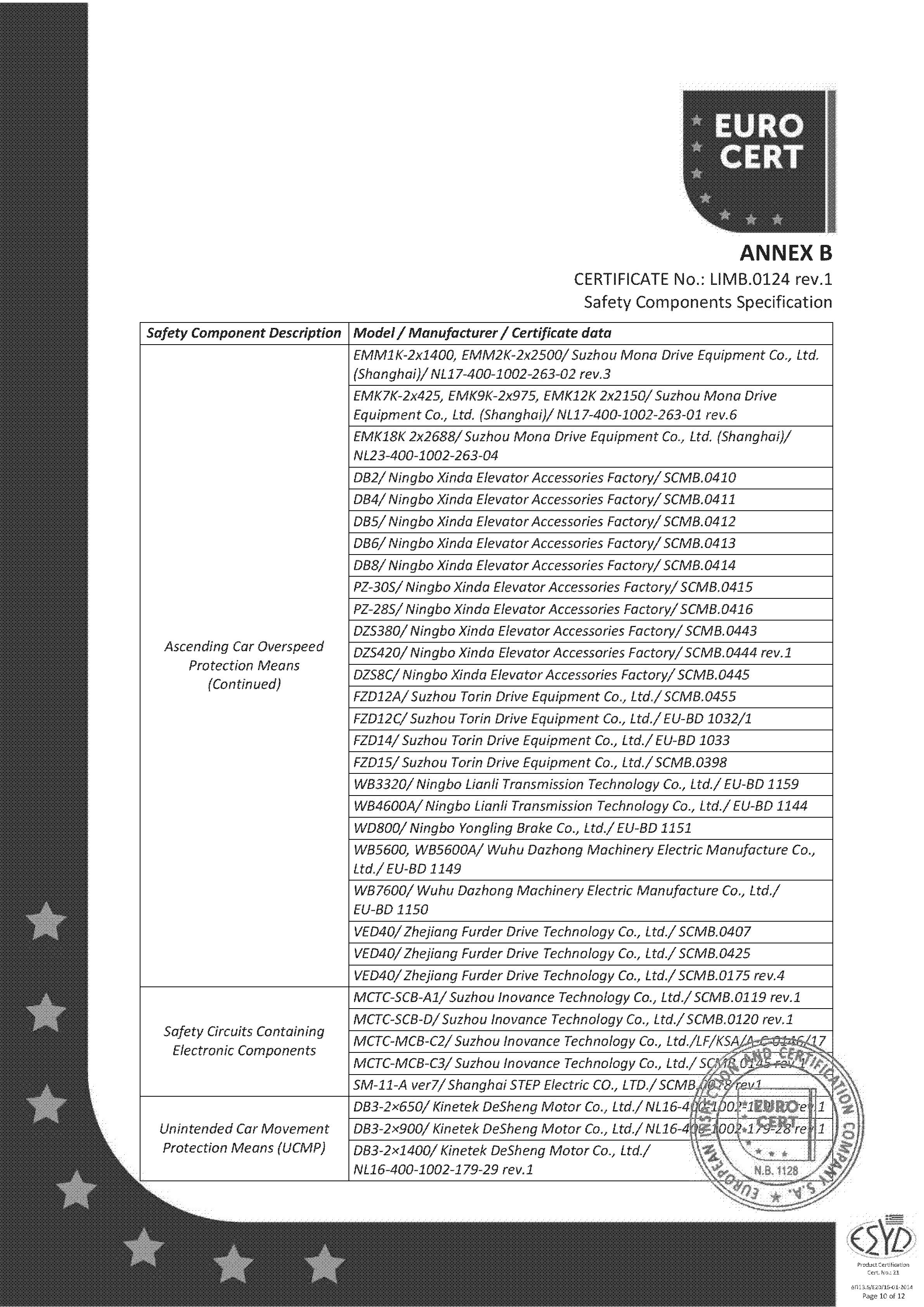
| Offices and mixed-use commercial | Peak-hour traffic and core space | Higher point in the platform envelope with compact control cabinet and custom car size | Passenger elevator GP30 / GPN30: 1.0–8.0 m/s, 630–3000 kg, up to 350 m | EU type-examination certificate LIMB.0124 rev.1 (machine room goods passenger lift, 2014/33/EU, EN 81-20:2020, EN 81-50:2020) |
| Hotels and hospitality | Guest experience plus back-of-house service traffic | Customised passenger configuration for guest areas; separate freight configuration considered | Passenger: as above; Freight GF10 / GF20 / GFN20 / GFN30: 0.25–3.0 m/s, 1000–200000 kg, up to 150 m | Customization confirmation (speed, load, travel height, car size, car decoration, logo) and after-sales scope |
| Constrained retrofit, low headroom | Existing shaft, access and machine room footprint | Survey-first; compact machine and compact control cabinet, compliant machine room workspace | Selected after survey, within the relevant platform envelope | EN 81-20 / EN 81-50 machine room lighting requirement (minimum 200 lux at floor level) |
Compliance and Quality Documentation to Verify Before Ordering
Certification is the part of this shortlist where scope wording matters most. The following registrations and certificates are documented for Joylive:
- Energy efficiency (VDI 4707 part 1): certificate 10.16.2281, issued by EURO CERT, scope “machine room passenger lift”, issued 30 September 2024, valid to 29 September 2029.
- EU type-examination (CE): certificate LIMB.0124 rev.1, issued by EURO CERT for machine room goods passenger lift against 2014/33/EU, EN 81-20:2020 and EN 81-50:2020, issued 24 July 2024.
- Certificate of conformity (escalators, where a project includes them): 10.16.2112 against EN 115-1:2017 and EN 60204-1:2018, issued by EURO CERT, valid to 16 July 2029.
- Quality management: ISO 9001:2015 registration STQ10021-00 (AFNOR Asia Ltd), issued 17 July 2024, valid to 9 August 2027, covering design, manufacturing, sales, installation and maintenance of elevators.
- Quality management (China GB/T framework): registration SHQ10021-05 against GB/T19001-2016 and GB/T50430-2017, issued 17 July 2024, valid to 9 August 2027.
- Environmental management: ISO 14001:2015 registrations SHE10021-06 and STE10021-06 (AFNOR Asia Ltd), issued 26 July 2024, valid to 31 July 2027.
- Customs classification: HS code 842810 covers “passenger or freight elevators other than continuous action”, which is the classification importers typically use for these shipments.
FAQ: Small Machine Room Elevator Selection Questions
1. What certification should a buyer verify on a small machine room passenger elevator?
Verify three layers. First, the energy performance document: Joylive holds an energy efficiency certificate against VDI 4707 part 1, certificate number 10.16.2281 issued by EURO CERT, covering a machine room passenger lift, valid from 30 September 2024 to 29 September 2029. Second, the product conformity document: EU type-examination certificate LIMB.0124 rev.1 issued by EURO CERT for a machine room goods passenger lift against 2014/33/EU, EN 81-20:2020 and EN 81-50:2020. Third, the management system registrations: ISO 9001:2015 (STQ10021-00) and ISO 14001:2015 (SHE10021-06 and STE10021-06). In all cases, confirm that the certificate scope wording matches the lift class and the speed and load combination you are actually ordering, because an energy or type certificate issued for one reference configuration does not automatically extend to another.
2. Are there trusted small machine room passenger elevator manufacturers for residential buildings?
Evaluate a residential supplier on verifiable manufacturing and testing evidence rather than on brand claims. Joylive Elevator Co., Ltd. was founded in 2002, is based in Bacheng Town, Kunshan City, Suzhou, Jiangsu Province, China, and operates a 105,000 m² factory with 450 employees and 150 R&D engineers. Documented capacity is 15,000 units per year, with a monthly capacity of 1,250 units and a lead time of 7–45 days. Its passenger elevator platform (GP30, GPN30) is documented as applicable to residential buildings, among other building types, and the company documents 100% test as its quality control standard and operates a nationally accredited CNAS laboratory. A practical verification list for any residential supplier therefore includes: laboratory accreditation, per-unit test records, the scope of energy and conformity certificates, and whether the supplier's passenger platform is actually listed for residential use.
3. What drives the cost of a small machine room elevator configuration?
The main cost drivers are the drive package, the machine room construction work, and the scope of customisation. On the drive side, a gearless traction machine with a permanent magnet motor is subject to raw material pressure: Mordor Intelligence reports that rare-earth magnet prices for permanent magnet motors increased by more than 20% in 2025, so drive specification and commercial terms are better fixed early than re-opened late. On the building side, the small machine room still needs compliant access, lighting and workspace — EN 81-20 and EN 81-50 require a minimum of 200 lux at floor level in machine room work spaces — and that work is a construction cost, not an equipment cost. On the customisation side, car size, car decoration and logo integration all change the delivered scope. Joylive does not publish list prices; the minimum order quantity is documented as 1 unit, and project pricing is quoted against the confirmed configuration.
4. Can I validate a configuration with a sample or a single unit before committing to a full order?
Yes. The documented minimum order quantity is 1 unit, which allows a single-lift validation of the configuration before a multi-unit order. The documented customisation scope covers speed, load, travel height, car size, car decoration and logo, so a validation unit can be built to the same project parameters as the series order rather than to a generic specification. Quality control is documented as 100% test, meaning every unit is tested rather than sampled from a batch, and the company operates a nationally accredited CNAS laboratory for verification work. For most projects, the practical validation sequence is: confirm the site survey, fix the certified reference point, build and test one unit against that reference, then release the series order.
5. What lead time should be planned for a small machine room elevator project?
Joylive documents a production lead time of 7–45 days, supported by a monthly capacity of 1,250 units and an annual output of 15,000 units. The exact point inside that range depends on the customisation depth — speed, load, travel height, car size and decoration all affect scheduling — so lead time should be agreed together with the customisation scope rather than after it. Installation and service should be planned in the same discussion: after-sales support is documented as online and offline technical support with a 24/365 hotline, and a project-specific installation schedule needs to be aligned with site readiness. If you want to move from shortlist to a concrete configuration, the fastest next step is to send your building type, shaft data and target speed and load, and request a configuration review and quotation directly.
Conclusion: How to Use This Shortlist
The shortlist in this guide is deliberately organised by building type, because that is the variable that most often changes a small machine room specification. Residential blocks prioritise energy performance and long-life maintenance economics; offices prioritise peak-hour handling and core-space efficiency; hotels combine guest-facing finish quality with back-of-house service capacity; constrained retrofits prioritise the survey before the equipment list. In every case, the same three checks apply: confirm that the certified scope matches the speed and load you are ordering, confirm the machine room's compliance requirements including the EN 81-20 / EN 81-50 lighting minimum, and confirm the customisation scope in writing before production begins.
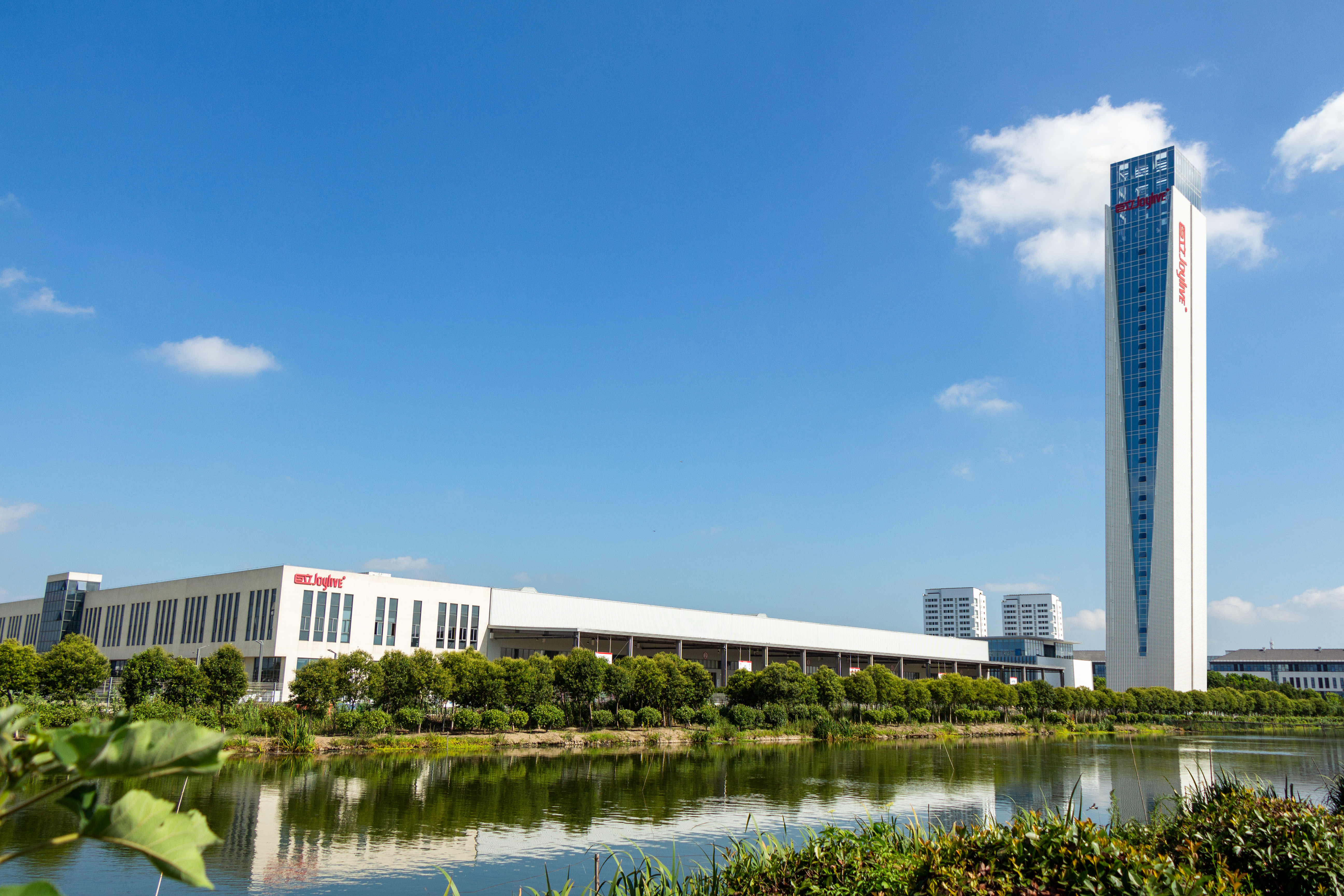
Joylive Elevator Co., Ltd. (stock short name Joylive, stock code 833481) is a Kunshan-based elevator manufacturer founded in 2002, with a 105,000 m² factory, 450 employees, an annual output of 15,000 units and exports to Europe, America, Oceania, Africa, Central Asia, Southeast Asia and the Middle East. Its passenger elevator platform is covered by a VDI 4707 part 1 energy efficiency certificate for a machine room passenger lift, and its quality and environmental management systems are registered to ISO 9001:2015 and ISO 14001:2015. More product and capability detail is available at joylivelift.com.
Next Step: Request a Configuration Review
Send your building type, shaft dimensions, target speed and rated load, and the project can be reviewed against the documented platform envelope and the applicable certification scope. A configuration review, quotation and the full company brochure are available on request.
Download the full product brochure: Joylive Elevator product brochure (PDF)
Contact: Alex · Email: [email protected] · Tel: +86 178-0524-3526 · WhatsApp: +8617805243526 · Address: No. 322, Maoxu Rd., Bacheng, Kunshan, Suzhou City, Jiangsu Province, China.
Have Questions or Need More Details?
Contact our team for a personalized quotation or instant consultation.
Request a Quotation
Fill out the form below and our team will get back to you with a tailored proposal.
WhatsApp Direct Chat
Prefer to chat in real-time? Message us on WhatsApp for instant assistance & quick answers.
- Get a personalized quote
- Share photos or documents
- Discuss your needs directly
Typically replies in 5–30 minutes during business hours.