
What Is a Small Machine Room Elevator? A Practical Guide for Buyers
What Is a Small Machine Room Elevator? A Practical Guide for Buyers
A small machine room elevator is a passenger elevator designed to operate with a compact machine room instead of a full-sized machine room. It is also described as a space-saving machine room elevator or a compact machine room elevator. In the elevator industry, this configuration is used when developers want to reduce the amount of building volume occupied by lift machinery, while still giving maintenance teams a dedicated service room.
This guide is written for architects, developers, investors, hotel owners, facility managers and procurement teams who are still in the research phase. It explains what a small machine room passenger elevator is, how it differs from other configurations, where it is commonly used, and what to check when selecting a supplier.
The elevator industry continues to expand. According to Grand View Research, the global elevator market was valued at USD 82.4 billion in 2025 and is projected to reach USD 136.9 billion by 2033. Within that market, traction elevators—the broad category that includes both compact machine room and machine-room-less elevators—represented the largest product segment, with a 55.1 percent revenue share in 2025.
Problem Definition: Why Machine Room Space Is a Procurement and Design Issue
Every elevator system needs space for the traction machine, controller, overspeed governor, power supply, and routine maintenance access. A conventional elevator machine room can consume a large amount of floor area or rooftop volume, especially in low-rise and mid-rise projects where every usable square metre affects the building plan.
Design teams respond in different ways. Some choose a machine-room-less elevator to remove the dedicated room entirely. Others prefer a conventional machine room to keep maintenance easy. In many cases, a space-saving machine room elevator is seen as a middle option: it reduces the machine room footprint without requiring the equipment to be placed entirely inside the hoistway or landing area.
For buyers, this creates a need to understand the differences before investment decisions are made. A compact solution may look attractive on paper, but the final decision depends on shaft dimensions, load requirements, travel height, local elevator regulations, and the manufacturer’s engineering capacity.
Industry Background: What Is Driving Interest in Small Machine Room Elevators
Several industry trends explain why compact machine room elevators now receive more attention. First, building costs have made developers more aware of the space consumed by mechanical systems. Second, traction elevator technology has improved, making it possible to pack drive and control systems into smaller enclosures. Third, passengers and building owners expect smooth, energy-efficient rides, which has encouraged the adoption of modern motor and drive technologies.
The regional demand pattern is also relevant. According to Grand View Research, Asia Pacific led the elevator market with a 41.7 percent revenue share in 2025. Urbanisation in this region continues to create demand for space-efficient vertical transportation in apartments, offices, hotels and public buildings.
There is also a cost-signal that buyers should keep in mind. Permanent magnet motors are widely used in modern elevators because they are compact and energy efficient. However, raw material costs can influence motor supply and pricing. According to Mordor Intelligence, prices for rare-earth magnets used in permanent-magnet motors increased by more than 20 percent in 2025. This type of market information matters when a buyer is comparing long-term equipment cost and supplier stability.
What Is a Small Machine Room Elevator? Definition and Typical Characteristics
A small machine room passenger elevator can be understood as a traction elevator that keeps the main drive equipment in a reduced machine room, rather than in a full-height machine room or in a completely machine-room-less layout. The room still exists, but its footprint and height are planned more tightly.
In practical terms, a compact machine room elevator often includes some or all of the following characteristics.
- Compact machine room: The drive equipment is arranged in a smaller enclosure beside, above, or near the hoistway.
- Gearless traction machine with permanent magnet motor: This drive type is generally more compact than older geared machines because the motor can operate at lower speeds without a large gearbox.
- Variable frequency drive: The VFD controls motor speed, improves ride comfort, and helps reduce starting current.
- Regenerative drive: When selected, this drive can return braking energy to the building power supply, supporting an energy-efficient small machine room elevator design.
- Compact control cabinet: A slimmer controller reduces the floor space needed inside the machine room.
- Low headroom and reduced shaft space: Some projects require configurations that shorten the overhead space or reduce the shaft envelope, especially when adding an elevator to an existing building.
These features are not automatic. A small machine room elevator specification should always be checked against the exact hoistway dimensions, machine room access route, ventilation, and local safety requirements. The term small machine room can be interpreted differently by different manufacturers, so buyers should request dimensioned drawings rather than relying on a generic label.
Manufacturer Capability: How Joylive Elevator Co., Ltd. Supports Compact Elevator Projects
When a project is at the awareness or research stage, buyers need to know whether the supplier can provide engineering support, complete equipment, and dependable advice. Joylive Elevator Co., Ltd., also known as Joylive, is one manufacturer in the passenger elevator segment that can support this evaluation.
Joylive was founded in 2002 and is based at No. 322, Maoxu Rd., Bacheng, Kunshan, Suzhou, Jiangsu Province, China. The company employs 450 people, including 150 engineers, and operates a factory area of 105,000 m² with an annual output capacity of 15,000 elevator units. Joylive also holds a Class A special equipment qualification in China covering manufacturing, installation, modernization and maintenance, and operates a CNAS laboratory for quality testing.
For multi-storey buildings, Joylive offers passenger elevator models such as GP30 and GPN30. The published specification range includes speeds from 1.0 to 8.0 m/s, loads from 630 to 3000 kg, and maximum travel height up to 350 m. Joylive’s passenger elevator application scope includes residential buildings, hotels, hospitals, transport hubs, schools, office buildings, infrastructure and factories.
Joylive exports approximately 55 percent of its output. Its products and service network cover China, Europe, America, Oceania, Africa, Central Asia, Southeast Asia and the Middle East. This gives international procurement teams a useful starting point when they are looking for a supplier with production scale and export experience.
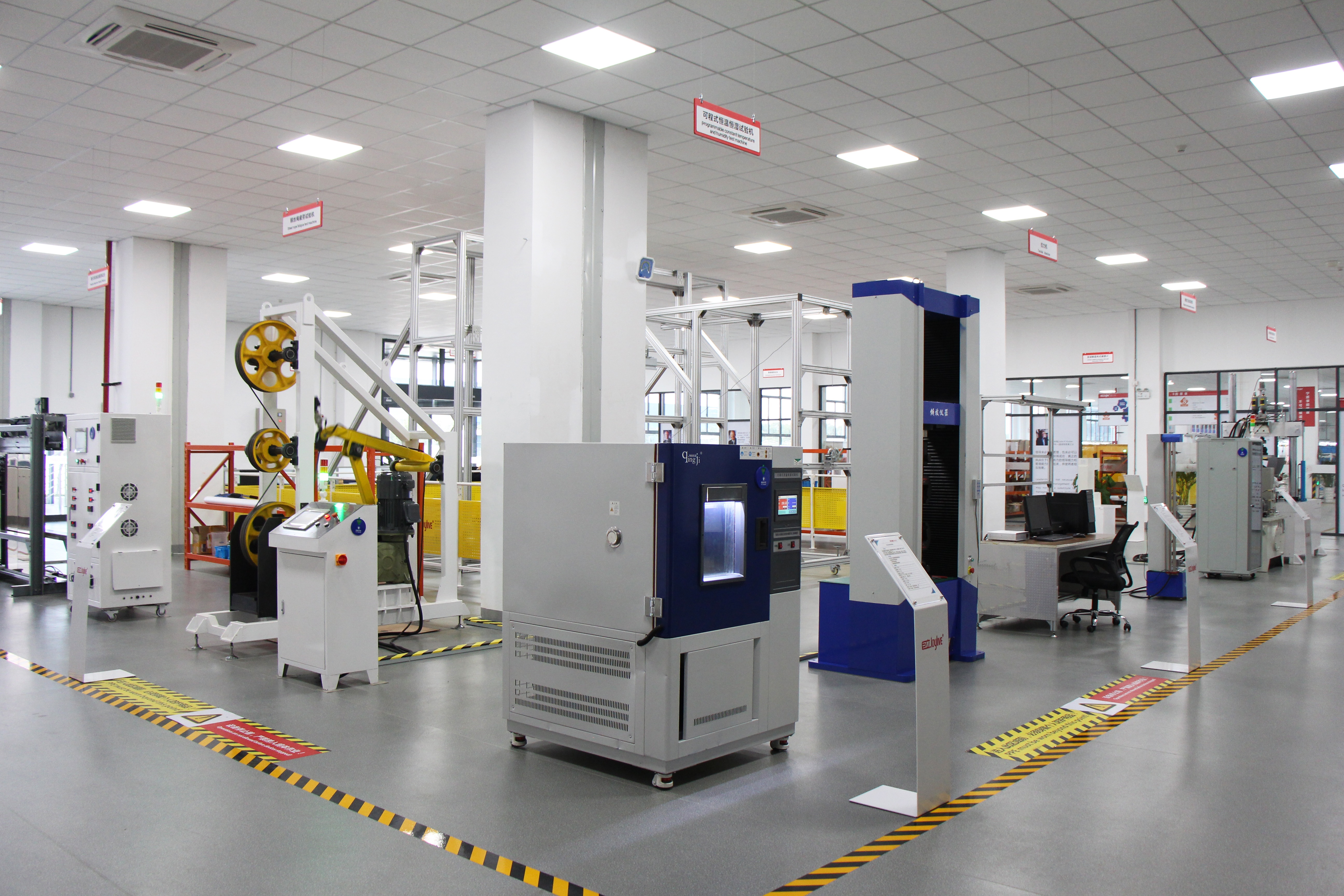
Joylive also states that it provides customized elevator system solutions from design and R&D through intelligent manufacturing to whole life-cycle management. For a buyer evaluating a compact passenger elevator configuration, this is relevant because shaft layout, machine room position, decoration and control functions often need to be adapted to a specific building.
Step-by-Step Breakdown: How to Evaluate a Small Machine Room Elevator for Your Project
The following steps can help a non-technical buyer move from interest to a practical set of requirements.
- Confirm the available shaft and machine room envelope. Measure the hoistway width, depth, pit depth, headroom and available machine room footprint. These dimensions determine whether a reduced machine room arrangement is realistic.
- Define passenger traffic and capacity needs. Consider the number of floors, expected users, travel distance and wheelchair or mobility requirements. For reference, Joylive passenger elevator models GP30 and GPN30 cover loads of 630 to 3000 kg and speeds of 1.0 to 8.0 m/s.
- Choose the drive and control configuration. Ask about a permanent magnet gearless traction machine, variable frequency drive, and optional regenerative drive. These choices affect building power demand, ride comfort and long-term energy performance.
- Consider low-headroom and reduced-shaft-space options. If the building has limited overhead space, the supplier should explain how the car, guide rails and compensation equipment are arranged. Small machine room elevator design can vary significantly from one manufacturer to another.
- Review compliance and maintenance safety. Elevator safety is governed by national codes and recognised standards. For example, EN 81-20 and EN 81-50 require at least 200 lux at floor level in machine room work spaces. Even a compact machine room must give technicians adequate space and lighting for service work.
- Shortlist manufacturers with engineering, production and quality credentials. Look for a factory-based supplier with design staff, production capacity, documented quality systems, and export experience. A manufacturer such as Joylive can provide engineering teams and factory-scale production, which may reduce the risk of specification errors.
- Request a proposal with dimensioned drawings. A reliable supplier should provide layout drawings, machine room requirements, shaft opening details, electrical requirements and any installation constraints. Use these documents to compare proposals with the site conditions.
Where Small Machine Room Elevators Are Commonly Considered
Residential Buildings and Apartments
A small machine room elevator for residential buildings is often considered when developers want to increase usable floor area. In apartment buildings and low-rise residential projects, the machine room can be placed in a compact rooftop enclosure instead of consuming a large amount of valuable space. Passenger elevator options from Joylive apply to residential buildings, which makes it possible to discuss shaft constraints and load capacity with the manufacturer.
Hotels
Hotels frequently need quiet, reliable vertical transport for guests, luggage and housekeeping. A small machine room elevator for hotels can support a more efficient architectural plan by reducing the machine room footprint while preserving access for the technicians who maintain the equipment. Hotel projects may also benefit from integrated building management systems and IoT monitoring, which are part of the wider elevator ecosystem.
Commercial Buildings and Office Buildings
Commercial projects often handle heavy passenger flow during peak hours. A small machine room elevator for commercial buildings is attractive when a building owner wants a professional-grade elevator solution without sacrificing too much rentable space. The compact machine room still allows engineers to reach the drive system, controller and safety components during maintenance.
Public Facilities and Infrastructure
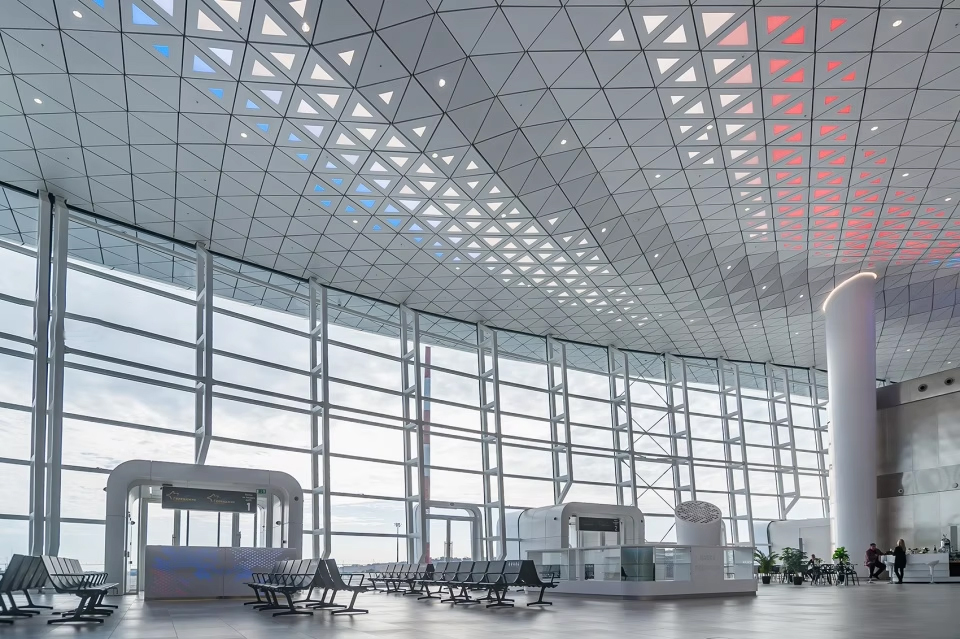
Airports, hospitals, transport hubs and other public projects require elevators that can operate under intensive traffic. Joylive’s application scope includes hospitals, transport hubs, infrastructure and public facilities. In these environments, the elevator system may need to support heavy people flow, fire-resistant materials and special environmental requirements. The supplier should be selected based on documented project capabilities, not only on the elevator configuration.
Comparison: Small Machine Room vs. Machine-Room-Less vs. Conventional Machine Room
The table below gives a general planning comparison. It is not a specification sheet, and every project should be checked against the manufacturer’s dimensioned drawings and local codes.
| Consideration | Small Machine Room Elevator | Machine-Room-Less Elevator | Conventional Machine Room Elevator |
|---|---|---|---|
| Machine room size | Reduced but still dedicated | No separate machine room required | Larger dedicated machine room |
| Space saving | Good balance between machine room and building space | Maximum architectural flexibility | Requires more building volume |
| Maintenance access | Technicians use a compact service room | Access is arranged inside or beside the shaft | Large work area is usually easier to access |
| Typical consideration | Often considered for apartments, hotels and low-rise or mid-rise buildings | Often considered when rooftop machine room is not allowed | Often used when space is not scarce or when a separate machine room is preferred |
| Design flexibility | Can work with low headroom or reduced shaft space projects if confirmed by manufacturer | Dependent on shaft design and maintenance hatch planning | Machine room must be accommodated in the building structure |
This comparison is a general awareness guide. Technical decisions must be based on project-specific loads, speeds, travel heights and engineering drawings.
Frequently Asked Questions
What is the difference between a small machine room elevator and a machine-room-less elevator?
A compact machine room elevator uses a dedicated space that is smaller than a conventional machine room. A machine-room-less elevator removes the separate machine room and places drive and control equipment in or near the shaft. They are different configurations, and the correct choice depends on building height, shaft design and maintenance preferences.
Which buildings are commonly suited to a compact machine room passenger elevator?
Compact machine room units are often considered for residential buildings, apartments, low-rise buildings, hotels and commercial projects where usable area matters. Joylive’s passenger elevator application scope includes residential buildings, hotels, hospitals, transport hubs, schools, office buildings, infrastructure and factories, but the exact machine-room arrangement should always be confirmed with the manufacturer before design work is finalised.
What equipment is typically used in a small machine room elevator?
Modern compact elevator installations commonly use permanent magnet gearless traction machines, variable frequency drives, optional regenerative drives, compact control cabinets, and low-headroom or reduced-shaft-space arrangements. These features help fit vital components into a smaller machine room while preserving service access. Buyers should verify the technology options against their project drawings.
What should buyers verify about Joylive Elevator’s manufacturing capability?
Joylive Elevator Co., Ltd. was founded in 2002 and is based in Kunshan, Jiangsu Province, China. It employs 450 people, including 150 engineers, and operates a 105,000 m² factory with an annual output capacity of 15,000 elevator units. Joylive also has a Class A special equipment qualification in China and operates a CNAS laboratory, which gives buyers a documented basis for supplier evaluation.
How can I request more information about Joylive passenger elevators?
Buyers can contact the Joylive team directly or download the company brochure. For a project-related enquiry, contact Alex by email at [email protected], by telephone at +86 178-0524-3526, or through WhatsApp at +86 178-0524-3526.
Final Thoughts and Next Step
A small machine room elevator is not a single standard product; it is a configuration decision that must be matched to the building shaft, passenger traffic, maintenance strategy and local safety rules. Because compact machine room arrangements affect both construction cost and future service access, buyers should treat this as an engineering decision rather than simply choosing the shortest specification document.
For procurement teams moving from research to shortlisting, the most useful next step is to test the manufacturer with real questions about shaft dimensions, drive technology, headroom and service access. A manufacturer with engineering staff, factory capacity, and export experience can give a more practical answer than one that only provides a price list.
Next step: If you are evaluating passenger elevators for a residential, hotel, apartment or commercial building, contact Joylive Elevator Co., Ltd. to discuss your shaft and machine-room requirements.
Contact: Alex
Email: [email protected]
Telephone / WhatsApp: +86 178-0524-3526
Website: https://joylivelift.com
Have Questions or Need More Details?
Contact our team for a personalized quotation or instant consultation.
Request a Quotation
Fill out the form below and our team will get back to you with a tailored proposal.
WhatsApp Direct Chat
Prefer to chat in real-time? Message us on WhatsApp for instant assistance & quick answers.
- Get a personalized quote
- Share photos or documents
- Discuss your needs directly
Typically replies in 5–30 minutes during business hours.