
Small Machine Room Elevator: The Complete Buyer's Guide for Space-Efficient Buildings
Small Machine Room Elevator: The Complete Buyer's Guide for Space-Efficient Buildings
Small machine room elevators are traction passenger elevators with a dedicated but compact machine space, usually located above or beside the hoistway. They are often referred to as compact machine room elevators, space-saving machine room elevators, or simply small machine room passenger elevators when the project goal is to minimize the building volume used by the lift machinery. This guide explains what this elevator configuration is, how it relates to other machine-room designs, which building types benefit most from it, and how procurement teams should evaluate a manufacturer before selecting a small machine room elevator supplier.
Problem definition: where a small machine room elevator fits
Space is one of the most expensive constraints in residential, hotel, and commercial building projects. Architects and building owners often face a tension between providing a fully sized lift machine room, which consumes valuable floor area, and choosing a machine-room-less design, which moves more equipment into the hoistway and can make maintenance access less straightforward. A small machine room elevator solves this problem by reducing the machine room to the smallest practical area while keeping key components in a dedicated, accessible space. Buyers evaluating this concept should consider not only average machine room elevator dimensions but also shaft geometry, overhead height, pit depth, component access, and the efficiency of traction and control systems.
Industry background: why small machine room elevators are becoming more visible
According to Grand View Research, the global elevators market was valued at USD 82.4 billion in 2025 and is projected to reach USD 86.3 billion in 2026 and USD 136.9 billion by 2033, representing a compound annual growth rate of 6.8%. The same report indicates that Asia Pacific accounted for 41.7% of global revenue in 2025, and traction elevators held the largest type share at 55.1%. These figures are relevant to a small machine room elevator comparison because most compact machine room designs are based on traction technology. As more developers and hotel builders seek space-saving vertical transportation, the traction elevator platform is being refined with gearless permanent magnet motors, compact control cabinets, regenerative drives, and low-headroom layouts.
Detailed solution: designing around a small machine room
A small machine room elevator keeps the machine room concept but shrinks its size through technology. Instead of designing a room large enough for an oversized geared machine and bulky controller, modern designs combine the drive, controller, and safety equipment into a smaller footprint. This approach is often described as a reduced shaft space or low headroom solution, depending on where the space saving is achieved.
In a compact machine room configuration, the machine may sit above the shaft on a smaller structural platform. A gearless permanent magnet motor is frequently used because it removes the gearbox and allows the machine height to be reduced. Variable frequency drives provide smooth acceleration and deceleration, while optional regenerative drive units can recover braking energy and feed it back into the building system. A compact control cabinet further reduces the floor or wall area required inside the machine room. For buyers, these features form the basis of an energy-efficient small machine room elevator specification.
Safety and maintainability remain important even when the machine room is small. Under the European lift standards EN 81-20 and EN 81-50, which have been effective since 2017, work spaces in lift machine rooms must provide at least 200 lux illumination at floor level. This matters because a small machine room elevator must still give technicians adequate space and visibility to inspect the controller, drive, governor, and brake components safely.
Supplier capability: what to examine before selecting a manufacturer
Project teams should evaluate a manufacturer's engineering depth, production scale, and quality infrastructure before choosing a supplier. One established example is Joylive Elevator Co., Ltd., a China-based elevator manufacturer founded in 2002 and located at No. 322 Maoxu Road, Bacheng Town, Kunshan, Suzhou, Jiangsu Province. Joylive operates a 105,000 m² factory, employs approximately 450 people, and has an annual output capacity of about 15,000 units. Its workforce includes around 150 R&D engineers.
Joylive holds a top A qualification in China for special equipment manufacturing, installation, modernization, and maintenance, and operates a CNAS-accredited laboratory. The company also reports that around 55% of its products are exported to markets including China, Europe, America, Oceania, Africa, Central Asia, Southeast Asia, and the Middle East. For buyers searching for a small machine room elevator for residential buildings, commercial buildings, hotels, apartments, or low-rise buildings, these points indicate that the manufacturer can support a more technical procurement discussion.
Joylive's product range includes passenger elevators, freight elevators, home lifts, small passenger elevators, and other vertical transportation equipment. The GP30/GPN30 passenger elevator platform is available with load capacities from 630 kg to 3,000 kg and speeds from 1.0 m/s to 8.0 m/s. The GH30 home lift supports loads from 200 kg to 1,150 kg and speeds from 0.25 m/s to 1.75 m/s. These figures do not, by themselves, define a small machine room model; they show the breadth of passenger and home lift configurations that a capable supplier can provide.
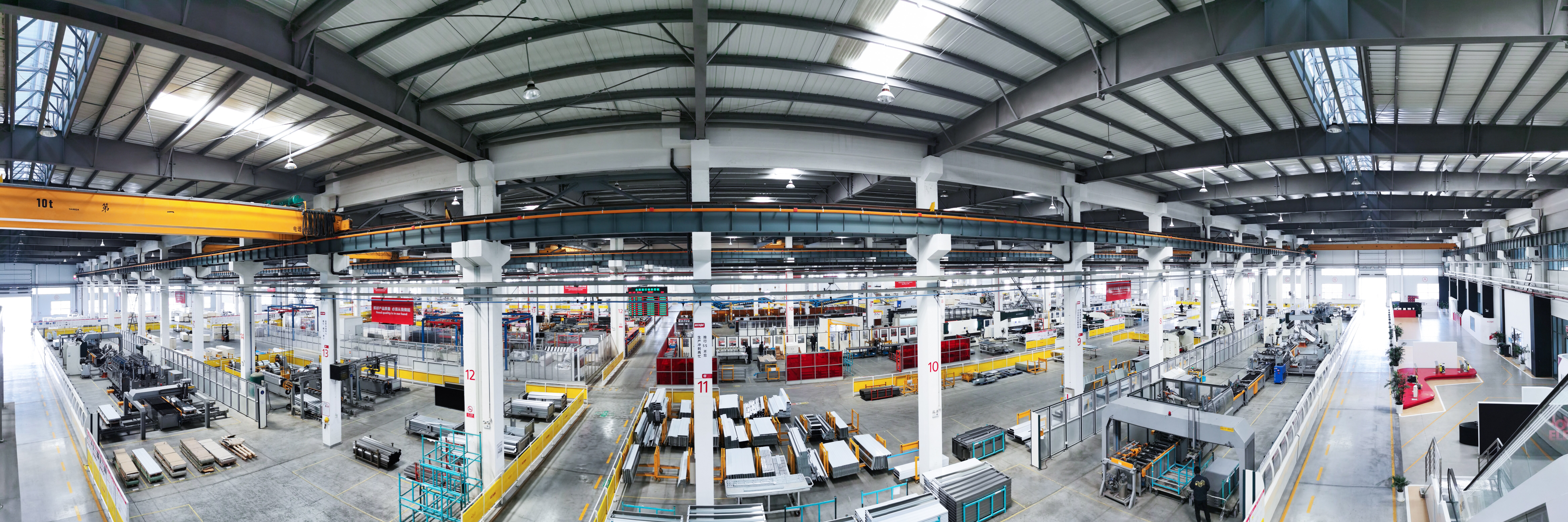
Joylive Elevator manufacturing center in Kunshan, Jiangsu Province
Step-by-step: how to plan a small machine room elevator project
- Define the building and shaft constraints. Measure the available shaft width, depth, overhead height, pit depth, and rooftop structural capacity. Note whether the project needs a small machine room elevator with low headroom or reduced shaft space.
- Determine the required load and speed. For a small machine room passenger elevator, use expected traffic flow and building height to choose a practical capacity range. For example, mid-rise apartment buildings often need more capacity than a private home lift, while a smaller project may not.
- Select the machine room and drive architecture. Ask whether the design can use a gearless traction machine with a permanent magnet motor, variable frequency drive, compact control cabinet, and regenerative drive when energy efficiency is a priority.
- Check codes, standards, and maintenance expectations. Confirm local elevator regulations and ask about machine room lighting and access. If EN 81-20 and EN 81-50 apply, the machine room work spaces should provide at least 200 lux at floor level.
- Evaluate suppliers with specific evidence. Ask for dimensioned drawings, product specification sheets, installation method statements, and references for similar projects. Use facts such as factory area, annual output, laboratory certification, and R&D resources to separate genuinely qualified manufacturers from resellers.
- Plan installation and after-sales support. A small machine room elevator installation still requires experienced technicians, proper commissioning, and a responsive spare-parts or maintenance process. Confirm the supplier's scope of work and after-sales communication channels.
Use cases for small machine room passenger elevators
Residential buildings, apartments, and low-rise buildings
In residential apartment projects, usable floor area has a direct financial value. A compact machine room elevator can reduce the effect of the lift on the roof profile and shaft layout. For private villas and multi-storey houses, a home lift like the Joylive GH30 is designed for family use, with practical load ranges, quiet operation, and decoration flexibility. For apartment projects, passenger elevator platforms such as the Joylive GP30/GPN30 are listed as applicable to residential buildings, hotels, hospitals, transport hubs, schools, office buildings, infrastructure, factories, and logistics parks. That breadth helps buyers compare small machine room elevator specifications for different building types.
Commercial buildings and public facilities
Commercial buildings and public facilities often require continuous operation and higher passenger flow. Joylive application data for commercial, public, and infrastructure projects includes passenger elevators and freight elevators under working conditions such as heavy people flow and 24/7 operation, with IoT device and Joycloud listed as matched equipment. For a small machine room elevator for commercial buildings, the priority should be duty cycle, control system reliability, and the ability to support monitoring in a busy environment.
Hotels and service-oriented buildings
Hotel projects often prioritize quietness, visual integration, and flexible decoration. A small machine room elevator for hotels can make better use of limited structural space while still providing a separate mechanical room for maintenance. Hotel buyers should combine the space-saving benefits with passenger comfort requirements, including smooth acceleration, reduced vibration, and a cabin interior that can match the building's architecture.
Comparison: small machine room elevator vs machine-room-less vs full machine room
| Configuration | Machine room space | Maintenance access | Space impact | Typical application logic |
|---|---|---|---|---|
| Full machine room elevator | Dedicated full-size room | Convenient access for technicians | Larger building footprint | Low to mid-rise projects where the building can afford the extra space |
| Small machine room elevator | Dedicated but reduced space | Accessible maintenance space | Smaller than a full machine room | Apartments, hotels, low-rise office and residential buildings |
| Machine-room-less elevator | No separate machine room | Access through the shaft or ceiling hatch | Minimal dedicated space | Projects where no machine room is allowed or desirable |
This summary is structured as a qualitative comparison because the exact boundary between a full machine room and a small machine room elevator dimension depends on local building codes, shaft design, and the manufacturer's configuration.
Frequently asked questions
What is a small machine room elevator?
A small machine room elevator is a traction passenger elevator that keeps a dedicated but compact machinery area separate from the lift shaft. It is designed to reduce the space used by a conventional machine room while still providing technicians with defined access to the controller, drive, and related equipment.
What is the difference between a small machine room elevator and a machine-room-less elevator?
A machine-room-less elevator places hoisting equipment and controls in or beside the hoistway, eliminating a separate machine room. A small machine room elevator retains a dedicated but reduced machinery area, which can simplify maintenance access while still saving space compared with a full machine room.
Why are traction elevators so common in this product category?
Global market data for 2025 shows that traction elevators held the largest revenue share, at 55.1%. Small machine room elevator designs commonly use traction technology with permanent magnet gearless motors, variable frequency drives, and compact control systems. This combination supports reduced machine room volume and smoother ride quality.
Where can a small machine room passenger elevator be used?
A small machine room passenger elevator can be considered for residential buildings, apartments, hotels, low-rise commercial buildings, and other projects where space efficiency matters. It is not limited to one building segment; the more important factors are shaft geometry, required load and speed, available machine room space, and applicable safety standards.
What lighting requirement applies to lift machine rooms?
European lift standards EN 81-20 and EN 81-50, effective since 2017, require machine room work spaces to have at least 200 lux of illumination at floor level. This requirement helps ensure safe maintenance regardless of how compact the machine room is designed to be.
Why should a buyer consider Joylive Elevator as a manufacturer?
Joylive Elevator Co., Ltd. is an experienced manufacturer with a 105,000 m² factory, approximately 450 employees, an annual output capacity of 15,000 units, and around 150 R&D engineers. It holds a top A qualification in China for special equipment manufacturing, installation, modernization, and maintenance, and it operates a CNAS-accredited laboratory. These facts give procurement teams a solid starting point when verifying engineering and production capabilities.
Next step for your small machine room elevator project
Choosing between a compact machine room elevator, a machine-room-less design, and a conventional machine room elevator depends on project-specific constraints. Start with a dimensional shaft plan and a clear passenger capacity requirement. Joylive Elevator can help buyers review whether their passenger elevator or home lift specification fits the available shaft and machine room space.
Contact Joylive Elevator Co., Ltd. for a project discussion or download the corporate brochure for more product background.
Email: [email protected]
Tel / WhatsApp: +86 178-0524-3526
Website: https://joylivelift.com
Brochure: Download Joylive corporate brochure
Have Questions or Need More Details?
Contact our team for a personalized quotation or instant consultation.
Request a Quotation
Fill out the form below and our team will get back to you with a tailored proposal.
WhatsApp Direct Chat
Prefer to chat in real-time? Message us on WhatsApp for instant assistance & quick answers.
- Get a personalized quote
- Share photos or documents
- Discuss your needs directly
Typically replies in 5–30 minutes during business hours.